
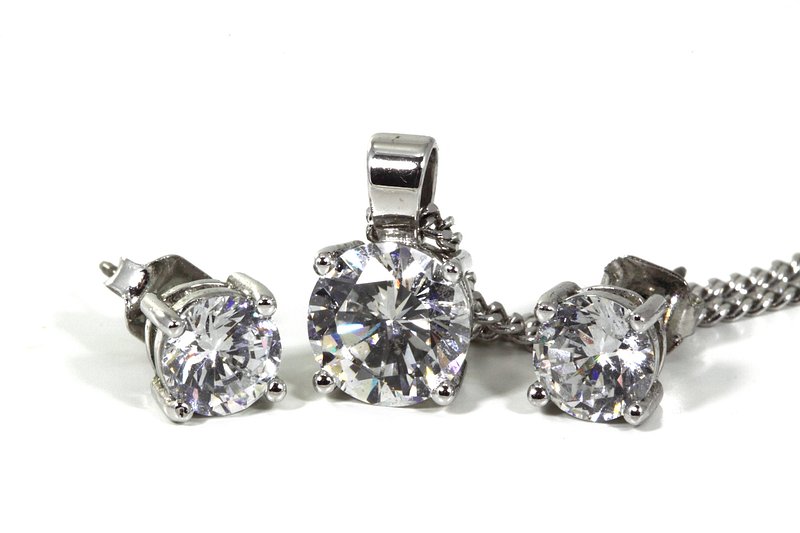
What should you know before buying diamond stud earrings? Diamond stud earrings are priced by the total carat weight of the pair, so a 1 carat pair holds two half-carat diamonds about 5 mm across. Choose the size first, then cut, matching and a secure setting.
Last updated: November 2026 · Prices checked against CaratRadar and retailer listings
Diamond Rings Info may earn a commission if you buy through links on this page, at no extra cost to you.
Key Takeaways
- “Carat total weight” covers both earrings, so each stone in a 1 ct tw pair weighs about 0.50 carats and measures about 5.0 mm (Hearts On Fire)
- A loose natural half-carat round has a median price of $926, against $323 for lab-grown (CaratRadar)
- Finished 1 ct tw studs in 14K white gold sell for about $880 to $910 lab-grown and $1,595 to $3,780 natural (Blue Nile, Rare Carat)
- Half-carat wholesale prices fell 20.3% in a year, far more than larger stones (Rapaport)
- Non-bridal purchases make up three-quarters of US diamond jewelry demand, the category studs belong to (De Beers Group)
- Cut and matching matter more than clarity in studs, because earrings are seen from a distance

What are diamond stud earrings?
They’re earrings with a single diamond on each ear, set on a post that passes straight through the piercing and held by a back. The diamond sits flat against the earlobe, with no drop or hoop, which is why studs suit every day and every outfit.
Studs are one style within the wider family of diamond earrings, which also includes hoops, drops, huggies and clip-ons for unpierced ears. Our main earrings guide covers those styles, piercing and backs; this guide focuses on choosing and pricing a pair of studs.
What size diamond stud earrings should you buy?
For most people, a 1/2 to 1 carat total weight pair is the sweet spot: visible across a room, comfortable on the lobe and affordable. Larger pairs of 2 carats and up make a clear statement but cost far more.
Remember that the weight on the label is shared between two stones. A 1 ct tw pair holds two diamonds of about 0.50 carats, each roughly 5.0 mm across, while a single 1 carat round measures about 6.5 mm (Hearts On Fire). Our diamond carat guide explains why weight and size don’t rise at the same rate.
Small earlobes suit 4 to 5 mm stones, and larger lobes carry 6.5 mm and up. If you’re unsure, compare the sizes against a coin or ask a jeweler to show you a few pairs side by side before you buy.
How much do diamond stud earrings cost?
A natural 1 ct tw pair usually costs about $1,600 to $3,800 finished, and a lab-grown pair about $900. Price depends mostly on total weight, natural versus lab-grown, the grades and the metal.
| Total weight of the pair | Each stone | Natural, finished pair | Lab-grown, finished pair |
|---|---|---|---|
| 1/2 ct tw | 0.25 ct, about 4.0 mm | About $500 to $1,200* | About $250 to $500* |
| 1 ct tw | 0.50 ct, about 5.0 mm | $1,595 to $3,780 | $880 to $910 |
| 2 ct tw | 1.00 ct, about 6.5 mm | About $7,500 to $10,000* | About $1,500 to $2,500* |
* My trade estimates, based on loose-stone medians plus a typical 14K gold setting. The 1 ct tw row uses real retail listings.
The 1 ct tw examples are a Rare Carat natural pair at $1,595 (H to I color, SI clarity), a Blue Nile natural pair at $3,780 and Blue Nile and Jared lab-grown pairs at $910 and $900, all in 14K white gold (Rare Carat, Blue Nile, Jared). The 2 ct tw estimate starts from two loose 1 carat rounds at the $3,714 natural median or the $604 lab-grown median (CaratRadar).

Will stud earring prices change next year?
Expect small natural diamonds, and lab-grown diamonds of every size, to keep getting cheaper. Rapaport’s wholesale index for half-carat stones fell 20.3% in a year and 1 carat stones fell 8.2%, while 3 carat stones barely moved (Rapaport). That’s good news for stud buyers, since studs use exactly those smaller stones, so treat the table above as a ceiling for the year ahead.
Which diamond grades matter most in stud earrings?
Cut matters most, then matching, then color, with clarity last. Earrings are seen from conversational distance and often from the side, so a bright, well-cut stone outshines a cleaner but dull one.
| Factor | Good choice for studs | Why |
|---|---|---|
| Cut | Excellent or Very Good for rounds | Drives sparkle, the main thing people notice |
| Matching | Both stones within one color and clarity grade and nearly the same diameter | A mismatched pair looks off even to untrained eyes |
| Color | G to J in white metal; K can work in yellow gold | Small stones show little tint |
| Clarity | SI1 to SI2, eye-clean | Inclusions are hard to see on the ear |
| Shape | Round, princess or cushion | Rounds sparkle most; princess cuts give more face-up size per carat |
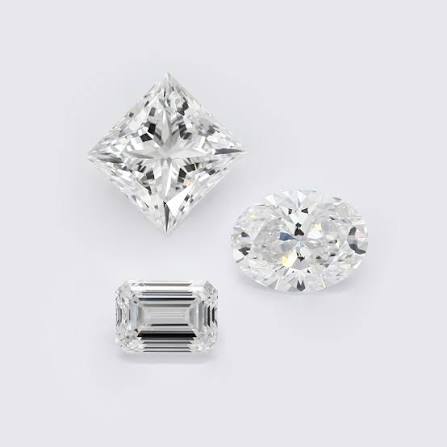
The diamond cut guide explains how proportions affect brightness, and our color chart and clarity chart show where the grades sit. For pairs of 1 ct tw and up, ask for a grading report on each stone; our diamond certificate guide explains what to check.
Which settings and backs are best for studs?
A four-prong basket with screw backs is the most popular secure choice. Three-prong martini settings sit closer to the lobe, six prongs grip larger stones and bezels give the most protection for active wear.
| Setting | Look | Best for |
|---|---|---|
| Four-prong basket | Shows the most diamond; square outline | Everyday classic studs |
| Three-prong martini | Cone-shaped, sits flush against the lobe | Larger stones that might droop |
| Six-prong | Rounder outline, extra security | 1 carat stones and up |
| Bezel | Metal rim around each diamond | Sport, children and second piercings |
| Halo | Small diamonds frame the center | A bigger look for less |
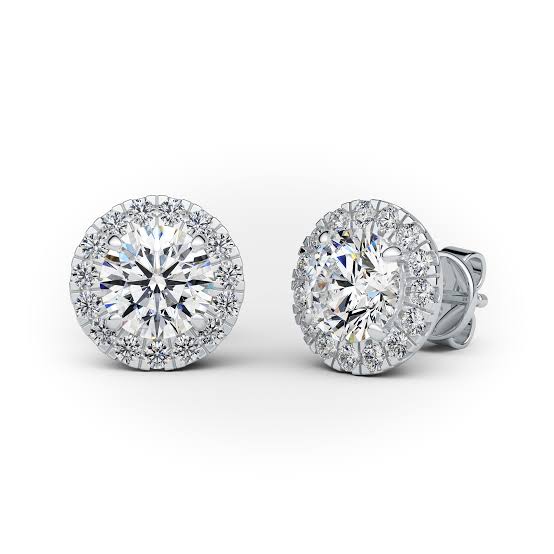
For backs, push backs are quick but can loosen, while screw backs and locking backs hold far better for valuable pairs. Our main earrings guide, linked above, compares every type of back in detail.
For the metal, platinum is strong and naturally white, and white gold costs less but needs occasional rhodium replating. Studs in white metal also make an easy set with a solitaire pendant from our diamond necklaces guide or a tennis bracelet.
Are lab-grown diamond studs a good choice?
Yes, if you want more size for the money. Lab-grown diamonds are real diamonds with the same hardness and sparkle as mined ones, and a loose lab-grown half-carat round costs about a third of a natural one (CaratRadar).
The trade-off is resale value, which is very low for lab-grown stones. US rules say sellers must clearly disclose when a diamond is lab-grown, using a term such as “laboratory-grown” (FTC). If the budget is tighter still, moissanite looks similar but isn’t diamond.
Where should you buy diamond studs?
Buy from a seller who states the total weight, both stones’ grades, the metal and the type of back, with a written return policy. Online sellers such as James Allen and Blue Nile list matched pairs with specifications, and a good local jeweler lets you see the pair on your ear before paying.
Check that both stones face up the same size and color under daylight, and that the posts are straight and the backs grip firmly. Natural diamond jewelry averaged $4,063 a piece in De Beers’ survey of 18,500 US women, so a quality pair of studs is a sensible first diamond purchase (De Beers Group).
How do you care for diamond studs?
Soak them in warm water with a drop of dish soap, brush gently behind the stones with a soft toothbrush, then rinse and dry. Lotion and hair products build up under the diamonds and dull them quickly.
An ultrasonic cleaner is safe for diamonds in solid gold or platinum. Check the prongs and the tightness of the backs every few months, store each pair in its own compartment, and take studs out for swimming and contact sports.
How I researched this guide
I researched loose-diamond prices from more than 88,000 natural and lab-grown half-carat listings tracked by CaratRadar in October and November 2026, plus finished 1 ct tw pairs from Rare Carat, Blue Nile and Jared, and checked them against my 20 years of matching and setting diamonds. Sizes come from Hearts On Fire’s carat chart; rows marked with an asterisk are my estimates.
Frequently asked questions about diamond stud earrings
How much are 1 carat diamond stud earrings?
A natural 1 carat total weight pair in 14K gold usually costs about $1,600 to $3,800, depending on the grades. A lab-grown 1 ct tw pair costs about $900.
What does 1 ct tw mean on diamond earrings?
It means one carat total weight for both earrings combined, so each stone weighs about half a carat and measures about 5 mm across.
What size diamond stud earrings are most popular?
Pairs of 1/2 to 1 carat total weight are the most common choice, because they’re clearly visible but comfortable and affordable for everyday wear.
What clarity is good enough for diamond studs?
SI1 to SI2 is usually enough, because inclusions are very hard to see on the ear. Put the money into cut and a well-matched pair instead.
Are screw backs better than push backs?
For valuable studs, yes. Screw backs and locking backs hold far more securely than standard push backs, which can loosen over time.
Are lab-grown diamond studs real diamonds?
Yes. Lab-grown diamonds have the same chemistry and hardness as mined diamonds, but they cost much less and have very little resale value. Sellers must disclose that they are lab-grown.
Will diamond stud earring prices drop?
Small natural diamonds and lab-grown diamonds have been falling. Rapaport’s half-carat index fell 20.3% in a year, so stud prices are likely to stay soft.
How do I clean diamond stud earrings?
Soak them in warm soapy water, brush gently behind the stones with a soft toothbrush, then rinse and dry. An ultrasonic cleaner is fine for diamonds in solid gold or platinum.
Ready to choose your studs?
Pick your total weight, insist on a well-cut matched pair with secure backs, and see every other earring style in our diamond earrings guide.
Anthony Chege is a gem and jewelry dealer with 20 years’ experience sourcing, grading and selling diamonds and diamond jewelry. He writes for Diamond Rings Info on diamond grading, pricing and buying.