

What are lab grown diamonds? Lab grown diamonds are real diamonds made of crystallized carbon, grown in weeks by HPHT or CVD instead of over billions of years underground. To buy one well, check its IGI or GIA report, confirm it is “as grown”, prioritize cut and compare prices.
Last updated: November 2026 · Checked against GIA, IGI, FTC and wholesale price data
Key Takeaways
- 61% of US engagement rings bought in 2025 had a lab-grown center stone (The Knot via JCK)
- Since 1 October 2025, GIA rates lab diamonds only “Premium” or “Standard”; IGI still gives full 4Cs grades (GIA)
- IGI grades about 65% of the world’s lab-grown diamonds (IGI)
- Look for “As Grown” on the report; many CVD stones get post-growth treatment to improve color (PriceScope)
- Wholesale prices for 1–3 ct lab rounds fell 42% in a year, to about $191 per carat paid by US retailers in Q2 2025 (Modern Jeweler)
- Wholesale margins on those stones reached 74%, so there is real room to negotiate on retail price
- The FTC requires “laboratory-grown” or similar wording right before the word “diamond” (FTC)

What are lab grown diamonds?
Lab grown diamonds are crystallized carbon with the same chemical and physical properties as mined diamonds; the only difference is where they formed (Wikipedia). In 2018 the US Federal Trade Commission dropped the word “natural” from its definition of a diamond, because lab stones now have “essentially the same optical, physical, and chemical properties as mined diamonds” (Forbes).
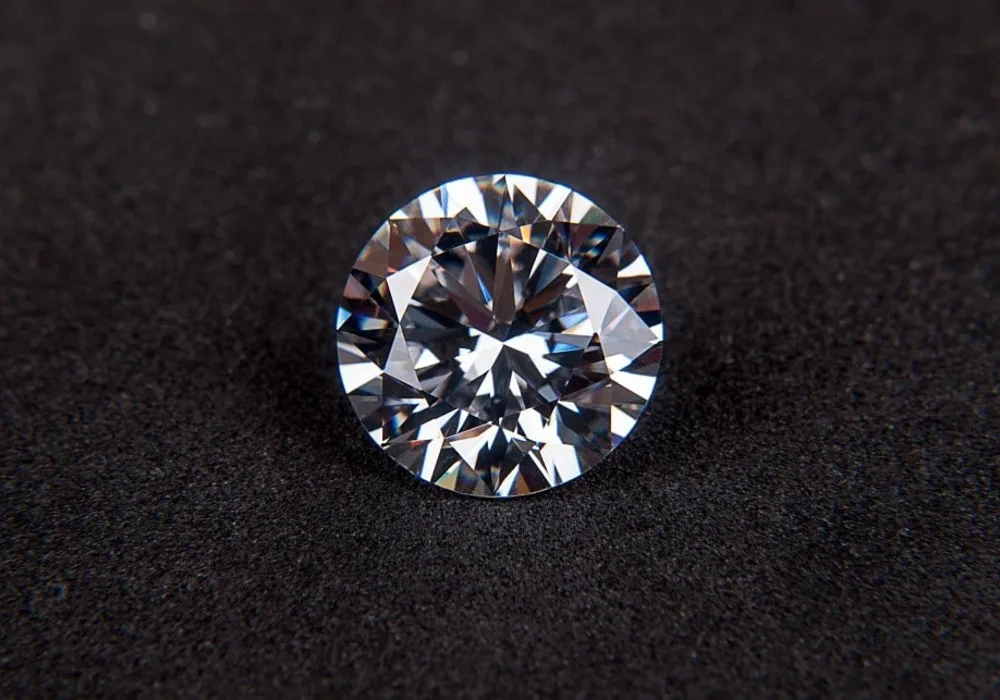
Most natural Wikipedia). A lab grows one in days or weeks, and a well-made stone can match the quality of the best natural diamonds. You can’t tell them apart by eye; gem labs use spectroscopy and other instruments, which is why the grading report matters so much.

How are lab grown diamonds made?
Lab grown diamonds are made in one of two ways. HPHT (high pressure, high temperature) presses recreate the earth’s conditions, about 5 GPa and 1,500°C, so molten metal dissolves carbon onto a small diamond seed. CVD (chemical vapor deposition) builds the crystal layer by layer from methane and hydrogen gas at around 800°C (Wikipedia).
General Electric made the first commercially successful synthetic diamonds in 1954, but gem-quality stones only became common in jewelry in the last decade or so. Once cut, labs grade them on the same metrics as mined stones: cut, color, clarity and carat, though GIA now groups them into broader bands (see Step 1).
Are lab grown diamonds cheaper and more ethical?
They are much cheaper, and they avoid mining, but “eco-friendly” needs a caveat. Lab grown stones once sold at around half the price of mined diamonds; today US retailers pay about $191 per carat for them at wholesale (see Step 4). Growing them takes a lot of electricity, and Fortune reports that more than 60% are produced in coal-dependent regions (Fortune). If sustainability matters to you, ask the seller where and how the stone was grown.

What should you know before buying a lab grown diamond ring?
This guide’s buying steps are for readers who have decided on a lab-made diamond and want a good one at a fair price. If you are still weighing lab against mined, start with our comparison of lab created vs real diamonds.
You will be in good company. The Knot’s Real Weddings Study, covering more than 10,000 US couples, found that 61% of engagement rings bought in 2025 had a lab-grown center stone, at an average of 1.9 carats and $4,600 (JCK).
Lab-grown, lab-made, lab-created and “[brand]-created” all describe the same thing. The US Federal Trade Commission requires one of these terms immediately before the word “diamond”, with equal prominence, and warns that “cultured” on its own is misleading (FTC). If a listing hides the disclosure, walk away.
Step 1: Which grading report should a lab grown diamond ring have?
Insist on a report from an independent lab, normally IGI or GIA, and check its number on the lab’s website before you pay. The two now report very different things, so know which one you are getting.
| What you get | IGI lab-grown report | GIA lab-grown assessment (since Oct 2025) |
|---|---|---|
| Color grade | Full D-to-Z letter grade | No letter grade; Premium needs D, Standard covers E–J |
| Clarity grade | Full grade, e.g. VS1 | No grade; Premium needs VVS or better, Standard VS or better |
| Cut grade (rounds) | Ideal / Excellent / Very Good, etc. | Premium needs Excellent; Standard needs Very Good |
| Growth method and treatment | Stated, e.g. CVD and “As Grown” or treated | Confirms laboratory-grown origin |
| Laser inscription | Report number | “Laboratory-Grown” plus assessment number |
| Market share | About 65% of lab-grown grading | Smaller share; below-Standard stones get no report |
GIA made the change because, in the words of executive vice president Tom Moses, “more than 95 percent of laboratory-grown diamonds entering the market fall into a very narrow range of color and clarity” (National Jeweler). The Premium and Standard requirements above come from GIA’s announcement.
My advice: an IGI report is fine and gives you more detail to compare stones. A GIA “Standard” stone can sit anywhere from E to J color, so ask the seller for its actual grade or view it yourself. Our diamond certificate guide shows how to read and verify a report.
Step 2: Is the lab diamond “as grown” or treated?
Check the report for the words “As Grown”; if they are missing, the diamond has had post-growth treatment. Many CVD diamonds grow with brownish tints or graining, and HPHT treatment after growth is commonly used to improve their color (PriceScope).
Treatment is not dangerous and does not make a stone fake. But it is something you should know and pay for accordingly: a treated stone should cost less than an as-grown stone with the same grades. Other treatments, such as irradiation for color, laser drilling or fracture filling, are rarer in colorless lab stones but must also be disclosed.
- Ask: “Is this stone CVD or HPHT, and is it as grown?”
- Check: that the answer matches the report, not just the listing.
- Compare: prices for as-grown and treated stones of the same size and grades before deciding.
Neither growth method is better in itself. CVD and HPHT both produce excellent diamonds; judge the individual stone and its report, not the process.
Step 3: How should you choose cut, color and clarity for a lab diamond?
Put your money into cut and size, not top color and clarity. Since 2022, 95% of lab diamonds submitted to GIA were colorless (D–F) and 98% graded VS1 or higher, so paying a premium for D/IF rarely buys a visible difference.
Cut is what makes a diamond sparkle. For round stones, choose IGI “Ideal” or “Excellent”, or GIA “Premium” or “Standard” with an Excellent cut. IGI says top cut grades give “maximum return of light and brilliance” (IGI). Our diamond cut guide explains proportions.
For color and clarity, F–H color and VS2 or better clarity look identical to D/FL in a ring on the hand. Use our color chart and clarity chart to compare.
Size is where lab diamonds shine, but think about proportion. A 3-carat stone on a small finger can look out of scale; try ring sizes on in a shop first.
Step 4: How much should a lab grown diamond ring cost?
A lab grown diamond ring should cost far less than a natural one of the same size, and the stone itself is often a small part of the price. US retailers paid an average of about $191 per carat for lab diamonds in Q2 2025, while the average 2025 engagement ring cost $4,600.
Those numbers come from Edahn Golan’s wholesale data, reported by Modern Jeweler. Retail prices fall more slowly than wholesale, so compare at least three sellers for the same report grades and use our diamond price calculator as a sanity check.
Should you buy now or wait for prices to fall further?
If you need the ring now, buy now. Just don’t treat it as an investment. Lab prices have fallen every year and may keep falling, which also means resale value is very low. Buy a ring you love at a fair price today, rather than waiting for a cheaper stone you might never notice the difference in.
Step 5: Which setting and metal suit a lab grown diamond ring?
Choose a setting that protects a larger stone: four or six prongs, or a bezel for active lifestyles. Bigger lab stones sit higher and catch more knocks, so security matters more than with a small natural diamond.
Platinum and 14K or 18K gold hold stones best. Our guide to diamond ring settings compares prong, bezel, halo and pavé styles, and a three-stone ring is an affordable way to use lab diamonds for both center and sides; just make sure all three are matched in color.
Step 6: How do you protect your lab diamond ring after buying?
Get a written return policy, insure the ring, and keep the report and receipt together. Jewelers Mutual confirms that “lab-grown diamonds can be insured just like natural diamonds,” based on an appraisal of replacement value (Jewelers Mutual).
Ask the appraiser to value it at current replacement cost, not an old retail price, or you will pay premiums on a value you could never claim. Our ring appraisal guide explains the process. Check the stone against its report when you collect the ring, and match the laser inscription with a loupe.
What mistakes do buyers make with lab grown diamond rings?
The most common mistakes are paying for grades you can’t see, skipping the treatment question, and not checking that the stone is a diamond at all. Watch for these red flags.
Simulants are the other trap. Moissanite and cubic zirconia are not diamonds and may not be called diamonds; our guide to fake diamond rings covers simple checks.

How we researched this guide
This guide replaces our original 2018 article on lab grown diamonds and is based on Anthony Chege’s 20 years in the gem and jewelry trade, checked against GIA’s official announcement, IGI, FTC guidance, Jewelers Mutual, The Knot’s 2026 study of 10,000+ couples and Edahn Golan’s wholesale price data. The questions it answers come from recurring buyer threads on the PriceScope forum.
Frequently asked questions about lab grown diamonds
Is IGI or GIA better for a lab grown diamond ring?
IGI gives full 4Cs grades and certifies about 65% of lab-grown diamonds, which makes stones easy to compare. Since October 2025 GIA only labels lab stones Premium or Standard. Either is acceptable; IGI gives more detail.
What does ‘As Grown’ mean on a lab diamond report?
As Grown means the diamond received no treatment after it was grown. If the report does not say As Grown, the stone was treated, usually with HPHT to improve color, and should cost less.
Is CVD or HPHT better for an engagement ring?
Neither method is better in itself. Both produce high-quality diamonds; judge the individual stone by its report, cut grade and whether it is as grown.
How are lab grown diamonds made?
Most are grown by HPHT, which recreates the heat and pressure of the earth in a press, or by CVD, which builds carbon onto a diamond seed from methane and hydrogen gas. Growth takes days to weeks rather than billions of years.
Do lab grown diamond rings hold their value?
No. Lab diamond prices have fallen sharply, with 1–3 ct wholesale prices down 42% in a year to Q2 2025, so resale value is very low. Buy one because you love it, not as an investment.
Can you insure a lab grown diamond ring?
Yes. Jewelers Mutual and other insurers cover lab-grown diamonds like natural ones. Get an appraisal at current replacement value so you don’t overpay on premiums.
How do I know a lab diamond is a real diamond?
Ask for an independent IGI or GIA report and match its number to the laser inscription on the girdle. Lab diamonds are real diamonds; moissanite and cubic zirconia are simulants, not diamonds.
Are lab grown diamonds real diamonds?
Yes. Lab grown diamonds are crystallized carbon with the same chemical and physical properties as mined diamonds. Since 2018 the US FTC has defined a diamond without requiring it to be natural, but sellers must clearly say it is lab-grown.
Ready to compare stones?
Compare any stone against at least three sellers, then browse engagement ring styles to choose its setting.
Anthony Chege is a gem and jewelry dealer with 20 years’ experience sourcing, grading and selling diamonds and coloured gemstones. He writes for Diamond Rings Info on diamond grading, pricing and buying.