

Elegance Of Diamond Necklaces
What should you know before buying diamond necklaces? Diamond necklaces range from a single solitaire pendant to a full tennis or riviera line, so choose the style and length first, then judge the diamonds on cut, color and clarity, and check the clasp and chain as carefully as the stones.
Last updated: November 2026 · Checked against De Beers consumer research and published jewelry references
Key Takeaways
- Non-bridal occasions account for three-quarters of US diamond demand, which is where necklaces and pendants sit (De Beers Group)
- The average natural diamond jewelry piece cost $4,063 in 2025, up from $3,242 in 2023, in a survey of 18,500 US women (De Beers Group)
- The “tennis” name comes from Chris Evert dropping her diamond line bracelet during a match at the 1978 US Open (Wikipedia)
- Princess length, about 18 to 20 inches, sits at the collarbone and is the classic pendant length (Wikipedia)
- Lab-grown diamond wholesale prices fell 42% in a year, making big-look necklaces far cheaper (Modern Jeweler)
- A secure clasp and a solid chain matter as much as the diamonds, because a worn clasp is a common way necklaces get lost

What are the main styles of diamond necklaces?
The main styles are the solitaire pendant, the tennis necklace, the station necklace, the halo pendant, the riviera and the choker. Each spreads the diamonds differently, which changes both the look and the price.

| Style | What it looks like | Price level | Best for |
|---|---|---|---|
| Solitaire pendant | One diamond on a fine chain | Lowest to high, depending on the stone | Everyday wear, first diamond gift |
| Halo pendant | Center diamond framed by small diamonds | Low to medium | A bigger look for less |
| Station | Small diamonds spaced along the chain | Low to medium | Layering and casual wear |
| Tennis | Continuous line of matched diamonds | High | Evening wear and milestone gifts |
| Riviera | Line of diamonds that grow toward the center | Highest | Formal events and heirlooms |
The tennis necklace borrows its name from the tennis bracelet. While playing at the 1978 US Open, Chris Evert lost her diamond line bracelet on court and asked to pause play, and “tennis bracelet” stuck (Wikipedia). The necklace name came later, by extension. Our guide to tennis bracelets covers the matching piece.
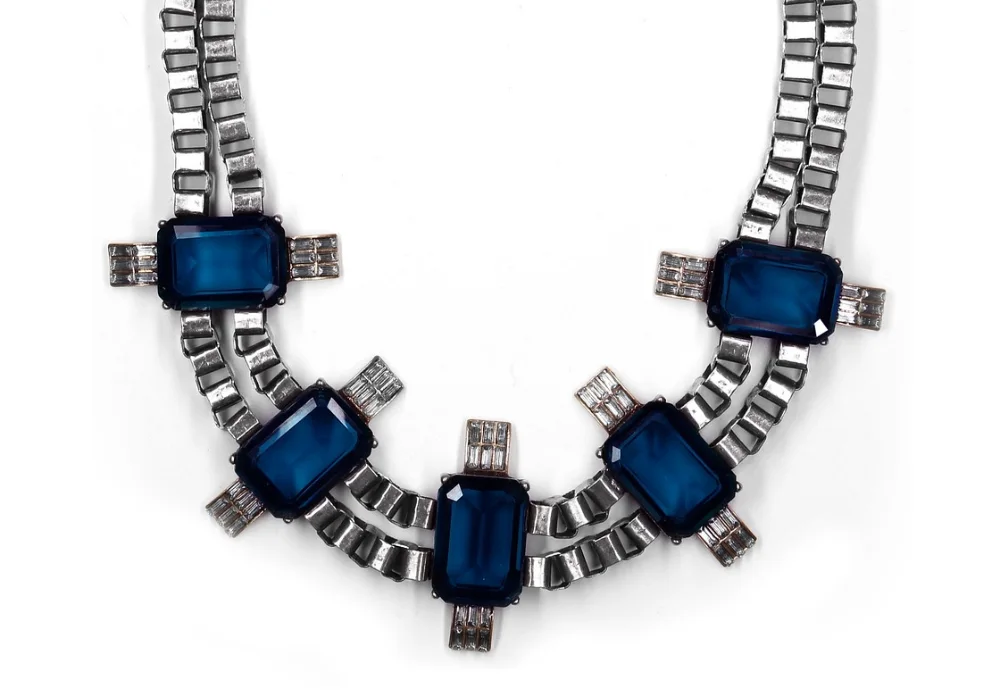
Chokers and collar necklaces sit high on the neck and suit formal outfits with open necklines. Statement collars like the one above often use colored stones or simulants rather than diamonds, so check the description carefully.
Which length should you choose for a diamond necklace?
For most people, a princess length of about 18 inches is the safest choice for a pendant, because it sits at the collarbone and works with most necklines. Shorter lengths frame the face, and longer ones suit layering or high necklines.
Length names and ranges vary slightly between sellers; these follow the common classifications (Wikipedia). A common regret is buying the chain too short, so if you’re unsure, an adjustable chain with a slider or extra loop gives you room.
Which settings hold the diamonds in a necklace?
Most diamond necklaces use prong, bezel or pavé settings. Prongs let in the most light, bezels give the most protection, and pavé covers a surface with tiny diamonds for maximum sparkle.
Four-prong and six-prong settings suit solitaire pendants, while tennis necklaces usually use prongs or a box-style setting for each stone. A bezel is a good choice for a pendant worn every day, since it protects the girdle from knocks and won’t snag on knitwear.
How do you judge the diamonds in a necklace?
Judge a pendant diamond on cut first, then color and clarity. A necklace sits farther from the eye than a ring, so small inclusions are rarely visible, but poor cut makes a stone look dull from any distance; our diamond cut guide explains why.
For a solitaire pendant of half a carat or more, ask for a grading report and read our diamond certificate guide. For tennis and riviera necklaces, check that the stones are well matched in color, and remember that “total carat weight” adds up every small diamond; our diamond carat guide explains how weight relates to size.

How much do diamond necklaces cost?
Diamond necklaces cost anything from a few hundred dollars for a small pendant to tens of thousands for a tennis or riviera line. The total carat weight, the cut and color of the stones, the metal and the brand all drive the price.
For a benchmark, the average natural diamond jewelry piece bought in the US cost $4,063 in 2025, according to De Beers’ survey of 18,500 women (De Beers Group). Big designer names cost more for the same diamonds, so compare grading reports, not logos.
Are lab-grown diamond necklaces a good alternative?
Yes, if you want a large look on a budget. Lab-grown diamonds are real diamonds with the same chemistry as mined ones, and wholesale prices for 1 to 3 carat lab stones fell 42% in a year (Modern Jeweler). They resell for very little, though, so buy them for wearing, not as an asset.
Be careful not to confuse lab-grown diamonds with simulants. Cubic zirconia jewelry looks similar but isn’t diamond and costs a fraction of the price.
Where should you buy diamond necklaces?
Buy from a jeweler or online retailer that gives clear specifications, a grading report for larger stones, a written return policy and a warranty on the clasp. Department stores, independent jewelers and online sellers can all be good; the paperwork matters more than the shop.
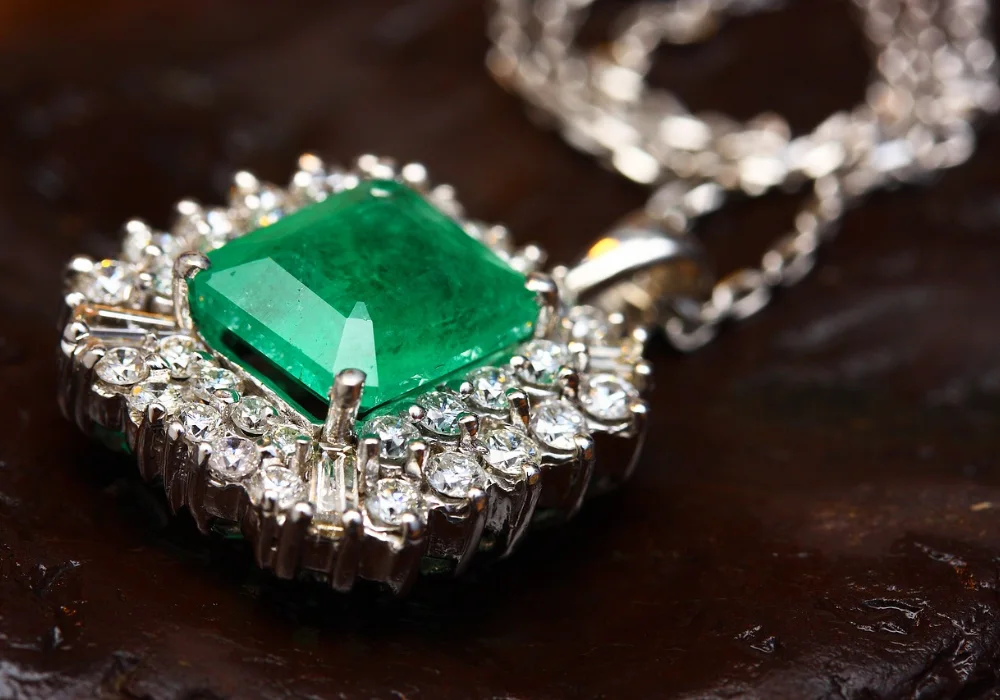
Pick the metal to suit the wearer: platinum is strong and naturally white, while white gold costs less but needs occasional rhodium replating. A necklace that matches existing diamond earrings in metal and color makes an easy set, and our diamond jewelry guide covers the wider picture.
How do you care for a diamond necklace?
Clean diamond necklaces with warm water, a drop of dish soap and a soft brush, then rinse and lay flat to dry. Store them hanging or flat in a lined box so the chain doesn’t knot, and take them off for swimming, sleeping and the gym.
Check the clasp and the prongs every few months, because a worn clasp is a common way necklaces get lost. An ultrasonic cleaner is fine for solid gold or platinum with diamonds, but avoid it for pieces with soft gemstones such as emeralds.
How I researched this guide
This rewrite draws on my 20 years selling diamond pendants and necklaces. Market figures come from De Beers’ survey of 18,500 US women, lab price data from Edahn Golan via Modern Jeweler, and length and tennis-bracelet history from published references.
Frequently asked questions about diamond necklaces
What is the most popular style of diamond necklace?
The solitaire pendant, a single diamond on a fine chain, is the classic everyday choice. Tennis necklaces with a continuous line of diamonds are the most popular formal style.
What length should a diamond pendant be?
About 18 inches, called princess length, suits most people because the pendant sits at the collarbone. Choose 16 inches for a closer fit or 20 inches for higher necklines.
Why is it called a tennis necklace?
The name comes from the tennis bracelet. Chris Evert lost her diamond line bracelet during a match at the 1978 US Open, and diamond line jewelry has been called tennis jewelry since.
How much does a diamond necklace cost?
From a few hundred dollars for a small pendant to tens of thousands for a tennis or riviera line. The average natural diamond jewelry piece in the US cost $4,063 in 2025, according to De Beers.
Are lab-grown diamond necklaces real diamonds?
Yes. Lab-grown diamonds have the same chemistry as mined diamonds and cost far less, though they have little resale value. Cubic zirconia is a simulant, not a diamond.
Which metal is best for a diamond necklace?
Platinum is strong and naturally white, white gold is a cheaper alternative that needs rhodium replating, and yellow or rose gold suit warmer looks. Match your other jewelry.
Can you wear a diamond necklace every day?
Yes, especially a solitaire or bezel-set pendant on a sturdy chain. Take it off for swimming, sleeping and exercise, and check the clasp regularly.
How do I clean a diamond necklace?
Soak it briefly in warm water with mild dish soap, brush gently with a soft brush, rinse and lay flat to dry. Avoid ultrasonic cleaners for pieces with soft gemstones.
Need help choosing?
Pick your style and length, check the report and clasp, and if you need help with your buying journey, feel free to contact me.
Anthony Chege is a gem and jewelry dealer with 20 years’ experience sourcing, grading and selling diamonds and diamond jewelry. He writes for Diamond Rings Info on diamond grading, pricing and buying.