
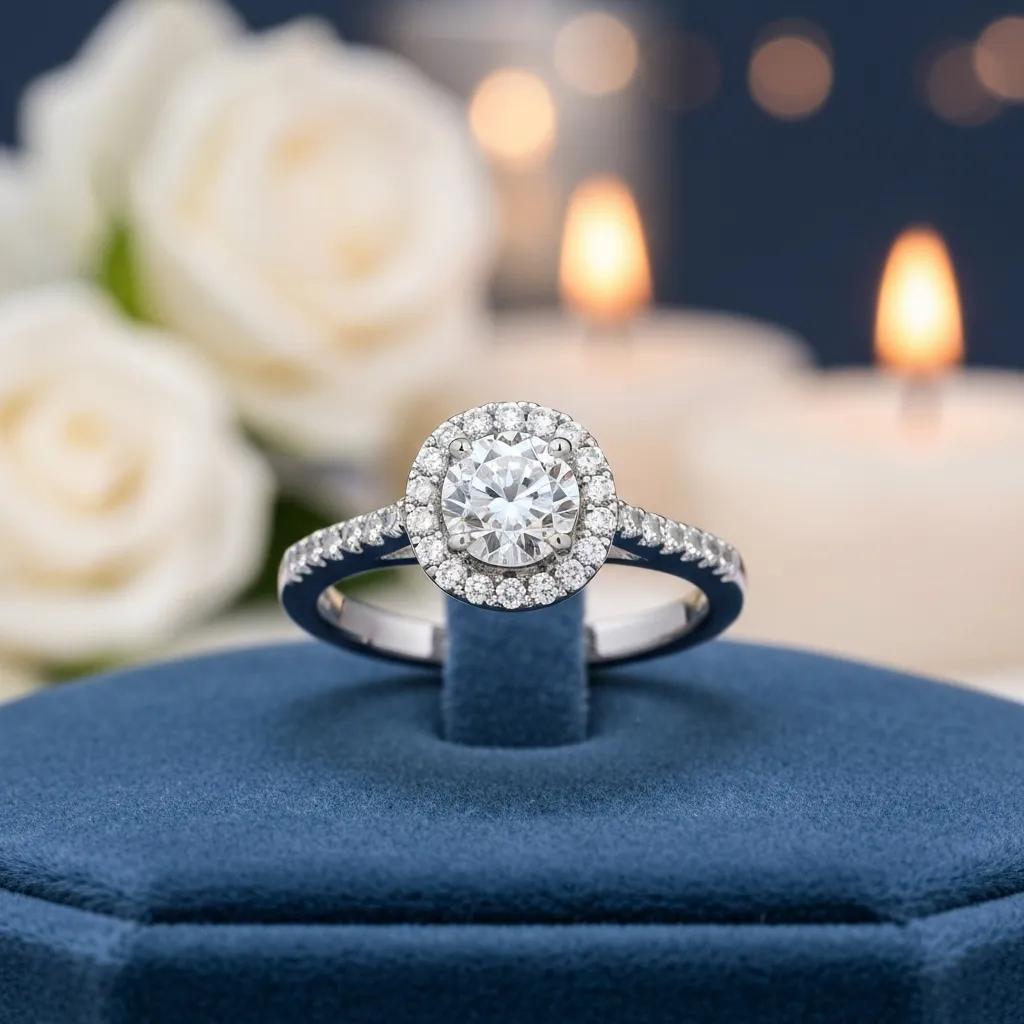
What are platinum diamond rings? Platinum diamond rings set diamonds in platinum that is usually 90% to 95% pure, a dense, naturally white metal that resists tarnish, holds stones securely and suits sensitive skin, though the ring usually costs more than white gold.
Last updated: October 2026 · Checked against FTC jewelry rules and current metal prices
Key Takeaways
- In the US, a ring can be marked simply “Platinum” only if it is at least 950 parts per thousand pure; 850 and 900 must show the number (FTC, 16 CFR 23.6)
- Platinum’s density is 21.45 g/cm³, versus 19.3 for pure gold, so a platinum ring feels noticeably heavier than the same ring in gold (Wikipedia)
- Per ounce, platinum ($1,670) cost far less than gold ($4,170) on October 13, 2026, yet platinum rings still cost more because they use more, purer metal (Kitco)
- About 71% of the world’s platinum was mined in South Africa in 2024, much of it from the Merensky Reef discovered in 1924
- 14.5% of European adults are allergic to nickel, which some white gold alloys contain; high-purity platinum is a safer choice for sensitive skin (EDEN study)
- Platinum develops a soft patina instead of wearing away, and never needs the rhodium replating that white gold does

What are platinum diamond rings?
Platinum diamond rings are diamond rings whose band and setting are made from high-purity platinum. They sit at the top of the market alongside 18K gold, prized for their bright white color, weight and durability.
People have worked platinum for a very long time. Pre-Columbian cultures near Esmeraldas in modern Ecuador made small objects from a gold-platinum alloy more than 2,000 years ago. In the early 1800s, English chemist William Hyde Wollaston developed the first practical way to refine platinum ore, discovering palladium and rhodium along the way.

The modern platinum jewelry trade rests on South Africa. Geologist Hans Merensky discovered the Merensky Reef in the Bushveld Complex in 1924; it holds roughly 75% of the world’s known platinum, and South Africa produced about 120 of the world’s 170 tonnes in 2024.
How pure is the platinum in a diamond ring?
Most platinum rings are 85% to 95% pure, far purer than 18K gold (75%) or 14K gold (58.3%). Under the US Federal Trade Commission’s jewelry guides, only metal that is at least 950 parts per thousand pure can be called “Platinum” with no number (16 CFR 23.6).
Metal that is 850 or 900 parts per thousand must show its fineness first, such as “900Plat.” or “850Pt.” Below 500 parts per thousand, it cannot be called platinum at all. “Pt” is the chemical symbol for platinum, and the number in front tells you its purity in parts per thousand.
| Stamp you may see | Platinum content | What it means |
|---|---|---|
| Platinum, PT950, 950 Plat., 950 Pt. | 95% | Top standard, most common for rings |
| 900 Plat. / 900 Pt. | 90% | Also common; must show the number |
| 850 Plat. / 850 Pt. | 85% | Lowest fineness allowed with the number alone |
| e.g. 600Pt.350Ir. | 50%+ with other platinum-group metals | Each metal must be listed by parts per thousand |
| Plated or “platinum finish” | Coating only | Must be described as plated or coated |

Always look for these FTC-compliant marks before buying. A ring with no stamp, or one marked only “PT” with no number, deserves questions and ideally a test by an independent jeweler.

How do platinum diamond rings compare to gold rings?
Platinum is purer, heavier and naturally white, while gold is lighter, usually cheaper as a finished ring and available in yellow, white and rose. Before choosing, compare platinum with gold rings on the points below.

| Feature | Platinum 950 | 18K white gold | 14K white gold | 14K yellow gold |
|---|---|---|---|---|
| Precious metal content | 95% platinum | 75% gold | 58.3% gold | 58.3% gold |
| Natural color | Cool white, permanent | Off-white, usually rhodium plated | Off-white, usually rhodium plated | Warm yellow |
| Weight in hand | Heaviest | Medium | Lighter | Lighter |
| Allergy risk | Very low | Low to medium (alloy dependent) | Higher if nickel alloy | Low |
| Upkeep | Occasional polish | Rhodium replating | Rhodium replating | Occasional polish |
| Typical ring price | Highest | High | Medium | Medium |
If your budget is tight, a white gold diamond ring gives a similar look for less. For a modern, lightweight alternative, see our guide to titanium rings.

Why is platinum the preferred metal for diamond settings?
Platinum holds diamonds securely and makes white diamonds look whiter. It is dense and tough, so prongs bend rather than snap, and it does not tarnish or corrode, which is why many jewelers choose it for engagement ring settings.
Its cool white color also flatters colorless stones. Yellow gold can reflect a warm tint into a diamond, while platinum keeps white diamonds looking crisp, which matters most for high color grades.

Platinum’s strength makes it a good choice for large center stones, such as the big rings in our guide. If you wear your ring hard, a ring guard adds extra protection; see our guide to diamond guards.
Are platinum diamond rings worth the extra cost?
For many buyers, yes, but not because platinum is a rarer metal per ounce right now. On October 13, 2026, platinum traded at about $1,670 an ounce against roughly $4,170 for gold (Kitco), reversing the old rule that platinum costs twice as much as gold.
Platinum rings still cost more because they contain more metal: the ring is 95% pure and platinum’s density means the same design weighs more than in 14K or 18K gold. Platinum also melts at about 1,768°C, so casting and finishing it takes specialist tools and more labor.
Don’t buy a platinum ring as an investment. The scrap value of the metal is a small part of the retail price, and the diamond’s resale value is usually well below what you paid. Buy it for its durability, color and comfort.
How do you choose the perfect platinum diamond ring?
Start with budget, style and how the ring will be worn, then choose the diamond using the 4Cs. Put cut first because it drives sparkle; our diamond cut guide explains the grades, and our diamond ring hub covers every style.
Plan the wedding band at the same time so the metals match; platinum worn against gold can wear the softer gold band over time. Our guide to diamond wedding ring sets shows matching options.

If you want something unique, work with a jeweler on a custom design: choose the diamond shape, band profile, setting and engraving. Our custom diamond ring guide walks through the process, from sketch to CAD model to casting.
How do you clean and care for a platinum diamond ring?
Clean it with warm water, mild dish soap and a soft toothbrush, then rinse and dry with a lint-free cloth. Avoid chlorine and harsh abrasives, which can harm some settings and dull other jewelry stored nearby.
Over time platinum develops a soft satin sheen called a patina, because scratches move the metal around rather than removing it. Some people love this look; a jeweler can polish the ring back to a mirror finish whenever you like. Home ultrasonic jewelry cleaners are generally safe for solid platinum set with untreated diamonds.
Store the ring separately so diamonds don’t scratch other pieces, and have the prongs checked once or twice a year. Keep an up-to-date appraisal for insurance.
How we researched this guide
This guide updates our original platinum ring article with Anthony Chege’s 20 years of experience setting and selling platinum and gold rings. We checked every claim against the FTC jewelry guides, Kitco’s live metal prices, published platinum data and a 3,119-person European study of nickel allergy, and corrected older figures that are no longer true.
Frequently asked questions about platinum diamond rings
Are platinum diamond rings worth it?
Yes, if you want a naturally white, heavy, hypoallergenic metal that holds diamonds securely and never needs rhodium replating. If budget matters more, 14K white gold gives a similar look for less.
Is platinum more expensive than gold?
Per ounce, no: on October 13, 2026 platinum was about $1,670 and gold about $4,170 (Kitco). But platinum rings usually cost more because they are 95% pure, denser and harder to work.
Does platinum scratch?
Yes, platinum scratches, but the metal is pushed aside rather than lost, creating a soft patina. A jeweler can polish it back to a high shine.
What does PT950 mean on a ring?
PT950 means the metal is 950 parts per thousand, or 95%, pure platinum. Under FTC rules, 950 is the only purity that can be called simply "Platinum."
Is platinum good for sensitive skin?
Yes. High-purity platinum is very unlikely to cause reactions, which matters because 14.5% of European adults are allergic to nickel, a metal found in some white gold alloys.
Can you resize a platinum diamond ring?
Yes, a skilled jeweler can resize platinum, though it costs more than gold because platinum needs higher heat and specialist tools. Some designs, such as full eternity bands, are hard to resize.
Does a platinum ring turn yellow?
No. Platinum is naturally white all the way through, unlike white gold, which can show a yellowish tint when its rhodium plating wears off.
How do I know if my ring is real platinum?
Look for a stamp such as PT950, 950 Plat. or 900 Pt. inside the band, and have a jeweler test it if there is no mark. A real platinum ring also feels heavy for its size.
Choosing between platinum and gold?
Compare the look and price of a white gold diamond ring, then check the stamp inside any platinum ring before you buy.
Anthony Chege is a gem and jewelry dealer with 20 years’ experience sourcing, grading, setting and selling diamonds in platinum and gold. He writes for Diamond Rings Info on diamond grading, pricing and buying.