
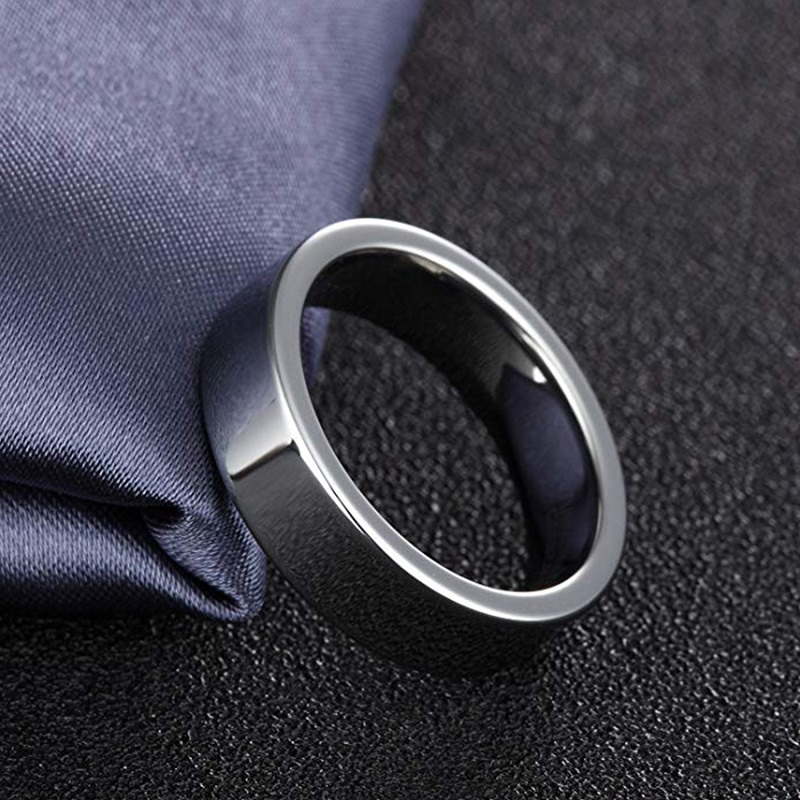
How do you choose a men’s wedding band? Pick the metal first, then the width (6mm suits most men), the fit and the finish. The ideal men’s wedding band is one you’ll forget you’re wearing, in a metal that suits your work and budget.
Last updated: November 2026 · Checked against The Knot spending data, retailer listings and emergency-medicine research
Key Takeaways
- The average men’s wedding band costs about $600, half the $1,200 average for women’s bands (Fidelity, citing The Knot)
- Tungsten (23%) and white gold (21%) were the top men’s band materials in The Knot’s jewelry study (National Jeweler)
- 6mm is the most popular men’s band width; most men choose between 6mm and 8mm (Long’s Jewelers)
- Tungsten carbide rates 8.5–9 on the Mohs hardness scale and titanium about 6, which is why both are hard to cut off in an emergency (American Journal of Emergency Medicine)
- Tungsten bands can’t be resized, so get your size right before you buy (Polymer Solutions)
- Platinum bands are about 95% pure and never need replating; white gold needs new rhodium every 1–2 years (Manly Bands)

What makes the ideal men’s wedding band?
The ideal men’s wedding band is comfortable enough to wear every day, tough enough for your job and hobbies, and simple enough that you’ll still like it in 30 years. For most men that means a 6mm to 8mm comfort-fit band in a metal they’ve tried on first.
Plenty of men have never worn a ring before, and the choice online can feel endless. Six decisions cover almost everything: metal, width, fit, finish, detailing and engraving. Work through them in that order, and your budget will narrow the field quickly.
Which metal is best for a men’s wedding band?
Gold and platinum are the classic, resizable choices. Tungsten and titanium are cheaper, very tough and popular with men who work with their hands, but they can’t be resized easily.
| Metal | Look | Durability | Can it be resized? | Good to know |
|---|---|---|---|---|
| Platinum | Naturally white | Dense and heavy; scratches into a soft patina | Yes | Never needs plating; most expensive |
| White gold | Bright white | Good; 14K is harder than 18K | Yes | Rhodium plating needs renewing every 1–2 years |
| Yellow gold | Warm, classic | Good | Yes | No plating; easy to repair |
| Rose gold | Pink, vintage | Good; copper makes it slightly harder | Yes | Less common, so it stands out |
| Palladium | White, like platinum | Good; lighter than platinum | Yes | Less widely sold than gold or platinum |
| Tungsten carbide | Gunmetal, white or black | Extremely scratch-resistant but can crack | No | Choose a nickel binder over cobalt |
| Titanium | Gray, light | Strong and very light | Rarely | Hypoallergenic grades available |
Platinum and gold
Platinum is the premium option: about 95% pure, naturally white and heavy on the finger (Manly Bands). It scuffs to a soft satin patina rather than losing metal, and it can be resized and polished for life. See our platinum diamond rings guide for more.
Gold comes in yellow, white and rose. White gold is gold alloyed with white metals and plated with rhodium for its bright color, so it slowly turns slightly warm until it’s replated (Borsheims). For karats and colors in detail, read our guide to gold rings for men.
Tungsten and titanium
Tungsten carbide is the scratch-resistance champion, which is why it has been the most popular men’s band material in surveys. The trade-offs: it’s heavy, it can crack if struck hard, and it can’t be resized because it’s sintered rather than cast. Cobalt-binder tungsten can irritate skin, so look for a nickel binder (Ridge). Our guide to cleaning tungsten rings covers care.
Titanium is very light and comfortable, good for men who dislike the feel of a ring. It’s strong but softer than tungsten, so it scratches more. See our titanium diamond rings guide.
Can tungsten and titanium rings be removed in an emergency?
Yes, but not with a standard ring cutter. Emergency staff crack tungsten carbide by squeezing it with locking pliers, because it’s too hard to cut (AJEM). Titanium is tougher to deal with: one hospital needed bolt cutters from the operating theater to remove a swollen patient’s titanium ring (ACEP Now). If you work in a job with crush or swelling risks, gold or platinum is the safer choice.
What width should a men’s wedding band be?
Start at 6mm, the most popular width, and adjust from there. Most men end up between 6mm and 8mm (Long’s Jewelers).
Narrower bands of 4mm to 5mm suit slimmer fingers and smaller ring sizes, while 8mm and wider suits large hands. Wider bands also cost more because they use more metal, so a wider band in a cheaper metal can cost less than a narrow one in platinum. Wide bands feel tighter, which matters when you pick your size.
How should a men’s wedding band fit?
Comfort comes first, because you’ll wear the band all day, every day. A comfort-fit band has a rounded inside that slides over the knuckle easily and sits smoothly; a standard-fit band is flat inside and feels snugger.
Size matters more for men than many expect, especially with tungsten. Get measured late in the day when fingers are largest, in the same width and fit you plan to buy, because wide and standard-fit bands fit differently (Whiteflash). Our ring size chart shows how to measure at home.
Which finish should you choose?
The finish changes the character of a band more than people expect, and it affects how scratches show.

- High polish: mirror-bright and classic, but shows every scratch.
- Matte or brushed: soft and modern, and hides light wear; it can be refinished.
- Combination: a matte center with polished edges, or the reverse, for contrast.
- Hammered: a hand-textured surface with a rugged look that disguises daily knocks.
Should a men’s wedding band have diamonds or details?
That’s down to taste. Men’s bands can be plain, set with a single flush diamond, or lined with small diamonds, sapphires or other gems. For ideas, see our guides to men’s diamond wedding rings and men’s diamond rings, and browse the full range of diamond wedding rings if you want his and hers to match.
Choose flush or channel settings for diamonds on a man’s band, because raised prongs snag and wear quickly on hands that work. Black diamonds are popular for a darker look; our black diamond guide explains what they are. Custom bands can add motifs, patterns or heritage symbols such as Celtic knots.
What should you engrave inside a men’s wedding band?
Initials, names, the wedding date, coordinates or a short phrase are the classics. Decide whether the engraving is private or a statement, and keep it short; ask the jeweler how many characters fit, because it depends on the band’s width, size and font. Engraving is also one more reason to choose a resizable metal, since resizing can distort lettering near the cut.
How do you match your band to your partner’s ring and your wedding?
Your bands don’t have to match, but they should feel like a pair. Matching metals is the easiest link: a platinum band beside a platinum engagement ring, or yellow gold with yellow gold. Mixed metals can work too if you repeat the color elsewhere, such as a rose gold band to echo a rose gold engagement ring.
Let the wedding guide the look. A formal black-tie wedding suits a dark band, such as black tungsten or black titanium, or a classic polished platinum band, while a rustic or beach wedding suits brushed gold or a hammered finish. Our guide to diamond wedding ring sets shows matched designs, and engagement rings for men covers the growing men’s engagement trend.
How much does a men’s wedding band cost?
About $600 on average, according to The Knot, though prices run from under $100 for alternative metals to several thousand dollars for wide platinum or diamond bands (Fidelity).
For example, a 6mm comfort-fit tungsten band costs $385 at Blue Nile (Blue Nile), while a 6.5mm comfort-fit 14K gold band lists at $2,430 before discounts (Blue Nile). Gold and platinum prices follow metal markets, so expect wide precious-metal bands to cost more when gold is high.

How do you care for a men’s wedding band?
Clean it with warm water, mild soap and a soft brush, and dry it with a lint-free cloth. Take it off for heavy lifting, gym work and anything involving harsh chemicals such as chlorine. Have gold and platinum bands polished every year or two, replate white gold as needed, and check any diamond settings for wear.
How I researched this guide
This guide combines our earlier “Ultimate Men’s Wedding Band Guide” and “ideal men’s wedding bands” articles, with promotional and off-topic sections removed. Spending data comes from The Knot via Fidelity and National Jeweler; widths from jewelers’ published guides; emergency-removal facts from the American Journal of Emergency Medicine and ACEP Now; and prices from Blue Nile listings, checked in November 2026. I checked everything against my 20 years buying, grading and selling diamonds and jewelry. This guide is independent and not sponsored by any brand.
Frequently asked questions about men’s wedding bands
What is the ideal men’s wedding band width?
For most men, 6mm. Men with smaller fingers often prefer 4mm to 5mm, and men with larger hands may prefer 7mm to 8mm or wider.
What is the most durable metal for a men’s wedding band?
Tungsten carbide is the most scratch-resistant, but it can crack and can’t be resized. Platinum is the most durable precious metal over a lifetime, because it doesn’t wear away and can be resized and repaired.
How much should a man spend on a wedding band?
The average is about $600. Tungsten and titanium bands cost a few hundred dollars, while gold and platinum bands range from several hundred to a few thousand.
Can a tungsten ring be resized?
No. Tungsten carbide is too hard and brittle to resize, so many sellers offer exchanges instead. Measure carefully before you buy.
Can emergency rooms remove tungsten or titanium rings?
Yes, but differently. Tungsten is cracked with locking pliers, and titanium may need heavy cutters. Gold and platinum can be cut with a standard ring cutter.
Should a men’s wedding band match the engagement ring?
It doesn’t have to. Matching the metal is the simplest way to make the rings look like a pair, but many couples choose bands that suit each person’s style.
What is comfort fit?
A comfort-fit band has a rounded inside edge so it slides over the knuckle and sits smoothly. It feels slightly looser than a standard flat-inside band of the same size.
Is white gold or platinum better for a men’s band?
Platinum stays white, is heavier and never needs plating, but costs more. White gold is cheaper and bright, but needs rhodium replating every year or two.
Ready to choose your band?
Try on a 6mm comfort-fit band in two or three metals, check your size late in the day, and compare matching styles in our diamond wedding rings guide.
Anthony Chege is a gem and jewelry dealer with 20 years’ experience sourcing, grading and selling diamonds and diamond jewelry. He writes for Diamond Rings Info on diamond grading, pricing and buying.