
What are black diamond engagement rings? Black diamond engagement rings are set with a black diamond, a real diamond colored dark by countless tiny inclusions. They look dramatic and cost less than white diamonds, but GIA found over one-third of the black diamonds it examined were treated, so always ask for a lab report.
Last updated: November 2026 · Checked against GIA research on Fancy black diamonds
Diamond Rings Info may earn a commission if you buy through links on this page, at no extra cost to you.
Key Takeaways
- Natural black color comes from tiny inclusions such as graphite, magnetite, hematite or native iron, not from trace elements (GIA)
- Over one-third of the black diamonds GIA examined had been treated, usually by heating to blacken fractures (GIA)
- GIA issues a Colored Diamond Identification and Origin report for almost all Fancy black stones, stating natural, treated or synthetic
- The famous Black Orlov weighs 67.50 carats; the largest cut carbonado, the Black Falcon, weighs 612.34 carats (Wikipedia)
- Black diamond rings are as hard as white diamonds but often more fractured, so protective settings matter
- Platinum and white gold give the strongest contrast; yellow and rose gold give a warmer, vintage look

What are black diamond engagement rings?
These rings use a black diamond as the center stone, often framed by white diamonds for contrast. They’re chosen by couples who want something bold and personal instead of the classic colorless solitaire, and black diamond rings are also popular as mens diamond rings.
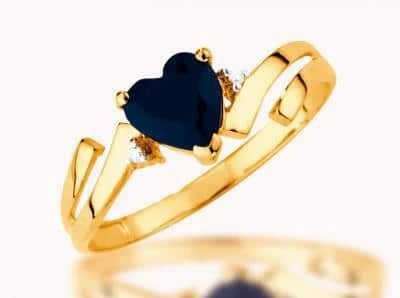
The stones in good black diamond rings are not industrial rejects. Dark, badly formed diamonds called BOART (bort) are usually crushed into abrasive grit for cutting and polishing other diamonds; the Democratic Republic of the Congo supplies about 75% of the world’s crushing bort. Gem black diamonds are selected, cut and polished for jewelry.
What makes a black diamond black?
A natural black diamond is black because it is packed with microscopic dark inclusions. GIA researchers found the main causes are tiny crystals such as graphite, magnetite, hematite or native iron, or dense clouds of pinpoint inclusions, or both (GIA).
That’s different from other colored diamonds. Blue comes from boron and yellow from nitrogen, while pink and red diamonds get their color from distortion in the crystal structure, not from manganese as older guides claimed. Black is simply the result of so many inclusions that light can’t pass through.
Most black diamonds are opaque with an almost metallic luster, though some look salt-and-pepper gray. Seen from the side, a stone that faces up black can show a dark brown or green body color.
What is carbonado?
Carbonado is a rare natural black diamond made of many tiny diamond crystals fused together with graphite and amorphous carbon. It has only been found in Brazil and the Central African Republic, and its origin is still debated, with theories ranging from deep-earth formation to meteorite impact (Wikipedia). The 612.34-carat Black Falcon is the largest cut carbonado.
Are black diamond rings natural, treated or lab-grown?
Black diamond rings can be set with any of the three, and the price difference is large, so you need to know which you’re buying. Over one-third of the black diamonds GIA examined had been treated, and lab-grown CVD diamonds can also be made to look Fancy black (GIA).
| Type | How it gets its color | Price | What to check |
|---|---|---|---|
| Natural black | Dense dark inclusions formed in the earth | Highest | GIA report stating natural color |
| Treated black | Heated so fractures and inclusions turn to graphite, or irradiated | Lower | Disclosure on the report and receipt |
| Lab-grown black | Grown by CVD with color-causing defects | Lowest diamond option | Report says laboratory-grown |
| Black simulants | Onyx, black spinel or black moissanite | Low | Not diamonds; must not be sold as diamonds |
Treatment isn’t a problem if it’s disclosed and priced fairly. GIA recommends that the color origin of every Fancy black diamond be confirmed by a lab, and it gives almost all of them a Colored Diamond Identification and Origin report (GIA). For more on treated stones, see our guide to diamond enhancement, and for lab stones, our guide to lab grown diamonds.

What do black diamond rings symbolize?
Black diamonds are linked with strength, mystery and individuality. For many couples, a black diamond engagement ring says they don’t follow the crowd, and it suits partners who rarely wear traditional jewelry.
Black diamonds have their own famous history too. The 67.50-carat Black Orlov, a cushion-cut stone surrounded by legends of an Indian temple and a curse, has been shown at the American Museum of Natural History and the Natural History Museum in London (Wikipedia).
Is a black diamond a good choice for an engagement ring?
It’s a good choice if you love the look and accept the trade-offs. On the plus side, a treated or lab-grown black stone gives you a large, bold diamond for a fraction of the price of a white one, and it never looks dirty or yellow. On the downside, black stones don’t sparkle with color the way white diamonds do, they need gentler handling, and they have little resale value unless they are large, natural and certified.
In my experience, the buyers who are happiest with black diamonds chose them for the style, not the price. If you’re unsure, a white diamond with black diamond accents or a black diamond wedding band is an easy way to try the look.
How do you choose black diamond engagement rings?
Choose the color origin first, then the cut and the setting. Black diamonds are graded mainly on how even and saturated the black is; look for a deep, uniform color with no gray patches, and check that the surface has no chips where inclusions reach it.

Faceted black diamonds give a glassy, mirror-like sparkle, while smooth polished or rose-cut stones have a softer look and cost less. Round, cushion and princess shapes are common; our princess cut guide covers the square option.
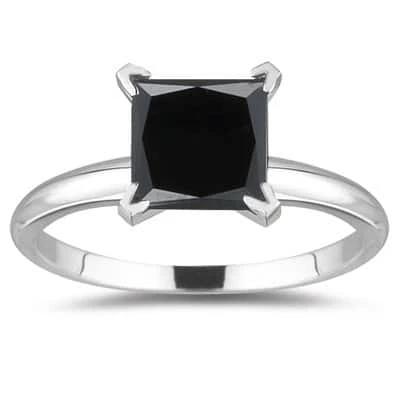
Black diamond rings look striking in platinum diamond rings because of the color contrast, and they also suit white and yellow gold. A halo of white diamonds makes a small black stone look bigger, and matching bands are easy to find in our Ring Sets guide.
How do you care for black diamond rings?
Treat black diamond rings more gently than white ones. They have the same hardness, but the many inclusions and fractures make them easier to chip, so choose a protective setting such as a bezel or halo for daily wear.
Clean them with a soft cloth or a soft brush in warm soapy water, and avoid ultrasonic cleaners and steam, which can stress fractured or treated stones. Store them separately so harder jewelry doesn’t knock them.
Where can you buy black diamond rings?
Buy from a seller who can give you a lab report for the center stone, whether that’s an online retailer such as James Allen, a local jeweler or a custom designer. If a seller can’t name the lab or the report number, walk away.
A custom ring lets you choose the exact stone and setting, and an independent diamond ring appraisal gives you a second opinion and an insurance value. If you like the dramatic look, also compare unique diamond rings and colored diamond rings.
How I researched this guide
This rewrite draws on my 20 years grading and setting colored diamonds. Facts come from GIA’s 2019 Gems & Gemology study of Fancy white and Fancy black diamonds and published references on carbonado, bort and the Black Orlov. No forum anecdotes were used, because this is a high-value purchase.
Frequently asked questions about black diamond engagement rings
Are black diamonds real diamonds?
Yes. Natural black diamonds are real diamonds colored by dense dark inclusions such as graphite, magnetite or hematite. Treated and lab-grown black diamonds are also real diamonds but must be disclosed.
What makes a black diamond black?
Countless tiny dark inclusions, or clouds of pinpoint inclusions, that stop light passing through the stone. Some black diamonds are treated by heating so their fractures turn to graphite.
Are most black diamonds treated?
Many are. GIA found that over one-third of the black diamonds it examined had been treated, so ask for a lab report that states whether the color is natural.
Are black diamond rings durable?
They are as hard as white diamonds, but their many inclusions and fractures make them easier to chip. A bezel or halo setting gives the best protection for daily wear.
Which metal is best for black diamond rings?
Platinum and white gold give the strongest contrast with a black stone. Yellow and rose gold give a warmer, vintage look and also suit black diamond rings.
Are black diamonds cheaper than white diamonds?
Usually, yes. Treated and lab-grown black diamonds cost much less than white diamonds of the same size. Large natural black diamonds with a lab report cost more.
How do you clean a black diamond ring?
Wipe it with a soft cloth or use a soft brush in warm, soapy water. Avoid ultrasonic cleaners and steam, which can stress fractured or treated stones.
What is a carbonado diamond?
Carbonado is a rare natural black diamond made of many tiny diamond crystals fused with graphite. It has only been found in Brazil and the Central African Republic.
Ready for something different?
Ask for the lab report, choose a protective setting, and explore more ring guides at Diamond Info.
Anthony Chege is a gem and jewelry dealer with 20 years’ experience sourcing, grading and selling diamonds, colored diamonds and gemstones. He writes for Diamond Rings Info on diamond grading, pricing and buying.
Diamond Info | Ring Sets | Black Diamond Engagement Rings