
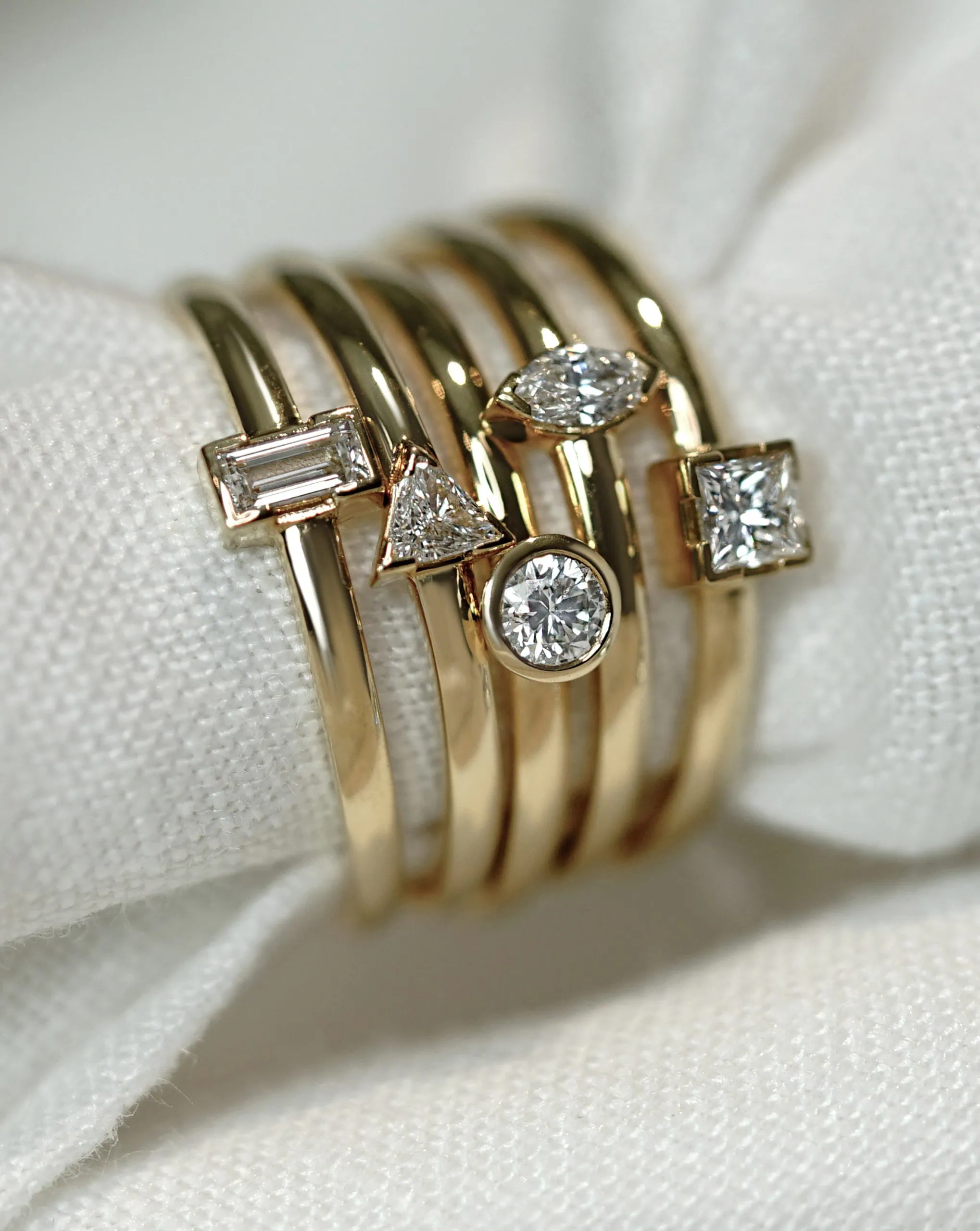
What is stackable ring jewelry? Stackable ring jewelry means slim rings designed to be worn together on one finger or across a hand, from plain gold bands to diamond pavé and birthstone rings. You build a stack by mixing widths, textures and stones around one anchor ring.
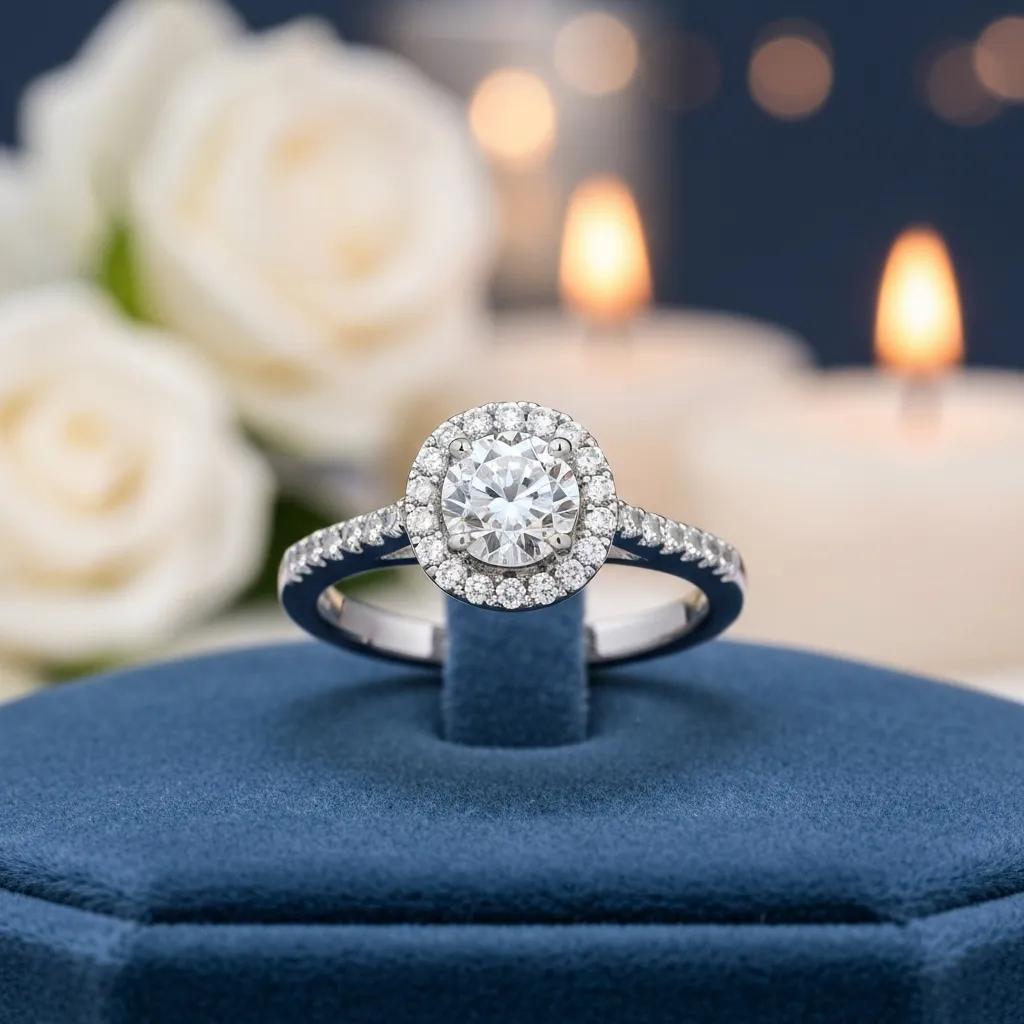
Last updated: November 2026 · Checked against Blue Nile listings, De Beers consumer research and published ring history
Key Takeaways
- Cartier’s Trinity ring, three interlocking bands, dates from 1924 and is one of the earliest famous stacked designs (Europa Star)
- The diamond eternity ring, now a stacking staple, was widely marketed from the 1960s (Wikipedia)
- Non-bridal purchases make up three-quarters of US diamond jewelry demand, the market stackable rings belong to (De Beers Group)
- Blue Nile lists 222 stackable styles, from a $280 2 mm 14K gold band to diamond bands over $1,500 (Blue Nile)
- 14.5% of adults in one European study were allergic to nickel, which matters for cheap stacking rings and some white gold (EDEN study)
- Rings worn together rub, so pick metals of similar hardness and size up slightly for a full stack

What is stackable ring jewelry?
It’s jewelry made of slim rings, usually 1 to 2.5 mm wide, designed to sit side by side on the same finger or to be spread across several fingers. Jewelers also call them stacking rings, stackers or a ring stack.
Any ring can be stacked, but purpose-made stackers have low profiles, smooth edges and comfortable inner shapes so they sit flush and don’t twist. A stack can be fully matched, such as three identical bands, or deliberately mixed in metal, texture and stone.
Where did ring stacking come from?
Wearing several rings together is ancient, but the modern stack has two famous ancestors: Cartier’s Trinity ring and the diamond eternity ring.
The Trinity ring, created in 1924, joined three interlocking bands in platinum, rose gold and yellow gold, and the white band only became white gold from the 1930s (Europa Star). It’s often said that the poet Jean Cocteau designed it, but Cartier’s archives show it was a stock design and he is only photographed wearing it from the early 1930s.
The diamond eternity ring, a band set with a continuous line of matching stones, was marketed widely by De Beers from the 1960s as a gift for married women and anniversaries (Wikipedia). Adding one to an engagement ring and wedding band created the classic bridal stack that many people still build on today; our guide to diamond wedding ring sets shows how they match.
What types of stackable rings are there?
The main types are plain bands, diamond bands, gemstone rings, textured bands and shaped bands. A good stack usually combines two or three of these.
| Type | Look | Role in a stack |
|---|---|---|
| Plain band, 1 to 2 mm | Polished or matte metal | Spacer that frames other rings |
| Diamond pavé or eternity band | Row of small diamonds | The sparkle, often the anchor |
| Gemstone or birthstone ring | One small colored stone | Color and personal meaning |
| Textured band | Rope, braid, beaded or hammered | Contrast next to smooth rings |
| Contour or curved band | A V or curve that hugs another ring | Fits snugly around an engagement ring |

A pavé band adds the most sparkle for a small budget, while birthstone rings let you add a stone for each child or partner. Plain band rings are the quiet workhorses that hold a stack together.
How do you build a ring stack?
Start with one anchor ring, then add slimmer rings around it, mixing at least one texture and keeping the total width comfortable. Three rings on a finger is a common sweet spot.
Choose the anchor first: an engagement ring, a diamond band or a ring with a colored stone. Then add a plain or textured band on one or both sides so the anchor stands out. Odd numbers, such as three or five rings across the hand, tend to look balanced.

Spread rings across fingers rather than piling them all on one. Many people keep their ring finger for the bridal stack and put fashion stackers on the index or middle finger, or on the right hand. Anniversary bands can be added over the years; our anniversary diamond rings guide has ideas.

Which metals are best for stackable rings?
Solid 14K gold and platinum are the best long-term choices, because they hold small stones securely and can be resized. Mixing metals is fine, but rings rub against each other, so the softer metal wears faster.
| Metal | Pros | Cons |
|---|---|---|
| 14K gold (yellow, white, rose) | Durable, affordable, easy to mix | White gold needs rhodium replating |
| 18K gold | Richer color, more gold | Softer, scratches faster in a stack |
| Platinum | Strong, naturally white, holds stones well | Highest price; can scratch softer gold rings |
| Sterling silver | Cheapest real metal | Tarnishes and bends easily |
| Gold vermeil or plated | Gold look for little money | Plating wears through with daily rubbing |
For a mixed-metal stack, read our guides to platinum and yellow gold, and our guide to gold rings for women for karats and colors. If you have sensitive skin, avoid cheap base-metal stackers, since nickel allergy affected 14.5% of adults in one European study of 3,119 people (EDEN study).
How should stackable rings fit?
A stack of three or more rings on one finger usually feels tighter than a single ring, so many jewelers suggest going up about a quarter to half a size for the full stack. Thin single bands can be your normal size.
Get sized late in the day, when fingers are largest, and try the whole stack on together if you can. Our ring size chart converts US, UK, EU and Japanese sizes.
How much does stackable ring jewelry cost?
A plain solid 14K gold stacking band starts at roughly $250 to $300, a textured gold band around $600, and diamond or sapphire stackers about $750 to $1,500. Plated and silver stackers cost far less but don’t last.
| Ring | Metal | Price |
|---|---|---|
| Classic wedding ring, 2 mm | 14K yellow gold | $280 |
| Mini rope ring | 14K yellow gold | $585 |
| Floral marquise diamond ring, 1/8 ct tw | 14K gold or platinum | $770 |
| Pavé sapphire and diamond ring, 1.5 mm | 14K white gold or platinum | $980 |
| Marquise and round diamond band | 14K white or yellow gold | $1,520 |
The examples come from Blue Nile’s stackable range, checked in November 2026 (Blue Nile). Gold traded near $4,123 an ounce that month, almost flat on a year earlier, so plain gold bands should cost about the same next year (Fortune). Lab-grown diamonds are a cheaper way to add sparkle, and their prices keep falling.
Build over time to spread the cost. Start with one quality anchor ring and one plain band, then add a birthstone or diamond band for birthdays and anniversaries.
How do you care for stacked rings?
Clean them separately in warm water with a drop of dish soap and a soft brush, then dry them well. Dirt trapped between rings dulls diamonds and speeds up wear.
Rings in a stack slowly polish each other thin, so have a jeweler check prongs and band thickness about once a year. An ultrasonic cleaner is safe for diamonds in solid gold or platinum, but not for plated rings or soft stones like emerald and opal.
How I researched this guide
This guide draws on my 20 years sizing and setting diamond bands. History comes from Europa Star’s research with Cartier’s heritage team and published references on eternity rings, market data from De Beers’ survey of 18,500 US women, prices from Blue Nile’s 222-style stackable range and Fortune’s gold price, and the allergy figure from the EDEN study. The sizing advice is common trade practice.
Frequently asked questions about stackable ring jewelry
What are stackable rings?
Stackable rings are slim rings, usually 1 to 2.5 mm wide, designed to be worn together on one finger or spread across the hand. They include plain bands, diamond bands, birthstone rings and textured bands.
How many stackable rings should you wear on one finger?
Two or three rings per finger is a comfortable, balanced number for most people. Spread larger stacks across several fingers instead of piling them on one.
Can you mix gold and silver stackable rings?
Yes, mixed metals are popular. Just remember that softer metals wear faster when they rub against harder ones, and silver tarnishes while gold does not.
Should stacking rings be a size bigger?
Many jewelers suggest going up about a quarter to half a size for a stack of three or more rings on one finger, because several bands feel tighter than one.
How much do stackable rings cost?
Solid 14K gold stacking bands start at roughly $250 to $300, textured gold bands around $600, and diamond or sapphire stackers about $750 to $1,500. Plated and silver rings cost less but wear faster.
Can you stack rings with an engagement ring?
Yes. Contour or curved bands are made to sit snugly against an engagement ring, and adding a wedding band and an eternity ring creates the classic bridal stack.
Do stacked rings damage each other?
Over time they rub and wear each other down, especially if one metal is much harder than the others. Choose similar metals and have a jeweler check prongs and band thickness yearly.
Who invented stacking rings?
People have worn several rings together for centuries. A famous early design is Cartier's Trinity ring of 1924, three interlocking bands in platinum, rose gold and yellow gold.
Ready to start your stack?
Pick one anchor ring, add a slim band in solid gold or platinum, and grow the stack one meaningful ring at a time.
Anthony Chege is a gem and jewelry dealer with 20 years’ experience sourcing, grading and selling diamonds and diamond jewelry. He writes for Diamond Rings Info on diamond grading, pricing and buying.