
How do you choose diamond engagement rings? Decide on a budget, pick the shape and setting she loves, choose a metal, then buy the best-cut diamond you can afford with a GIA or IGI report. The average couple spends about $4,600.
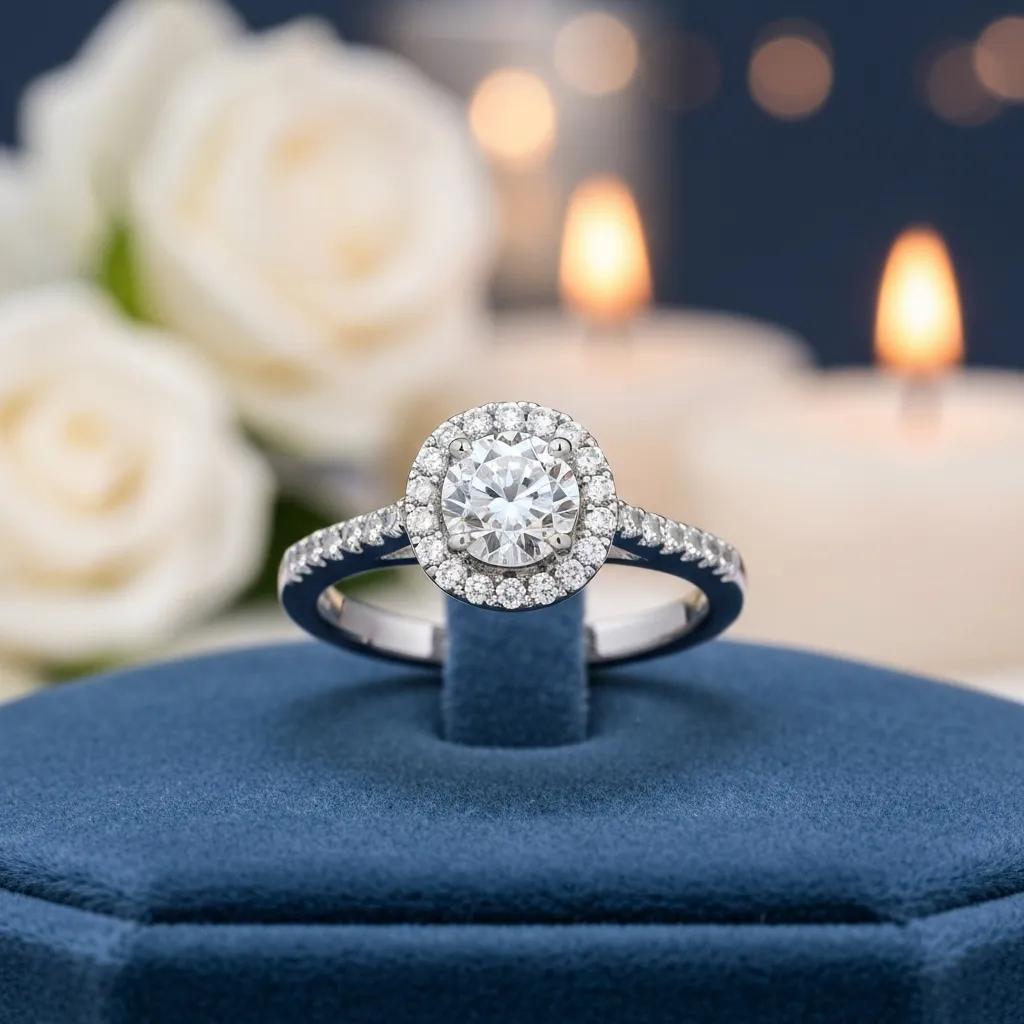
Last updated: November 2026 · Checked against ring history sources, survey data and tracked diamond prices
Key Takeaways
- The first well-documented diamond engagement ring was given by Archduke Maximilian of Austria to Mary of Burgundy in 1477 (Wikipedia)
- Before World War II only about 10% of American engagement rings contained a diamond; De Beers introduced “A Diamond Is Forever” in 1947
- Round is the most popular shape at 28% of rings, with oval close behind at 25% (The Knot)
- Lab-grown diamonds now make up 52% of engagement ring center stones in the same study
- Couples spent an average of about $4,600 on an engagement ring in The Knot’s latest study (Rapaport)
- Diamonds are graded on the 4Cs of cut, color, clarity and carat weight, the system GIA calls the industry standard (GIA)

Diamond Rings Info may earn a commission if you buy through links on this page, at no extra cost to you.
Why are diamonds used in engagement rings?
Diamonds became the standard engagement stone through a mix of royal tradition and twentieth-century marketing. The first well-documented diamond engagement ring was given in 1477, when Archduke Maximilian of Austria became betrothed to Mary of Burgundy (Wikipedia).
For centuries afterward, diamond rings stayed a luxury. Wikipedia notes that before World War II only about 10% of American engagement rings contained a diamond. De Beers began a marketing campaign in 1938 and introduced the slogan “a diamond is forever” in 1947, and a diamond soon became the expected choice in the United States.
Diamond’s hardness, 10 on the Mohs scale, also makes it the most practical stone for a ring worn every day for decades. It stands for strength, durability and commitment, which is exactly what the ring is meant to say.
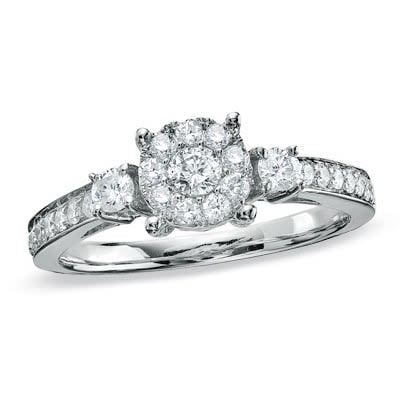
Which hand and finger is the engagement ring worn on?
In North America and the UK, the engagement ring is worn on the fourth finger of the left hand. In Germany it moves from the left hand to the right at marriage, and in countries such as Poland the right hand is traditional, though practice varies.
The custom is often linked to the old belief in the vena amoris, a “vein of love” said to run from that finger to the heart. Wikipedia traces the idea to ancient writers, who actually described a nerve, so it is a romantic story rather than anatomy. Some couples also exchange a promise ring before getting engaged, or buy a ring for each partner.
Which diamond shape should you choose for an engagement ring?
Choose round for the most sparkle and a timeless look, oval to make the stone look larger for its weight, and princess, emerald, cushion or heart for a more personal style. Round leads at 28% of rings and oval follows at 25% (The Knot).
| Shape | Look | Good to know |
|---|---|---|
| Round brilliant | Maximum sparkle, classic | Costs more per carat; see Round Diamond Rings |
| Oval | Looks larger, elongates the finger | Check for a dark “bow tie” across the middle |
| Princess and cushion | Square or pillow-shaped, bright | Protect sharp corners with V-prongs |
| Emerald and Asscher | Step-cut, elegant “hall of mirrors” look | Shows inclusions more; choose higher clarity |
| Heart and marquise | Romantic, distinctive | Symmetry is crucial; see Heart Shaped Diamond Ring |
Which engagement ring setting is best?
The best setting depends on lifestyle: prongs show off the most diamond, a bezel protects it best, and a halo or pave adds sparkle. Different stone settings also suit different shapes.
- Solitaire prong: a single diamond held high, the classic choice; see Diamond Solitaire Rings.
- Bezel: a metal rim around the stone, ideal for active hands.
- Halo and pave: small diamonds around the center or along the band make the ring look bigger.
- Channel: small diamonds set in a groove, smooth and snag-free.
- Tension: the diamond appears to float between the band’s ends; see Tension Set Rings.
Shape and setting influence each other. Round diamonds suit prongs, bezels and even flush settings, emerald, Asscher and marquise cuts are usually held in prongs to show their fire, and ovals work well in prongs or a bezel. For a splash of color, consider Diamond and Sapphire Engagement Rings or Diamond and Emerald Rings.
Which metal is best for a diamond engagement ring?
Gold and platinum are the main choices: 14K gold for value and durability, platinum for a naturally white metal that never needs plating. Yellow gold is currently the most popular, chosen by 39% of couples in The Knot’s study (Rapaport).
| Metal | Pros | Cons |
|---|---|---|
| 14K or 18K gold | Yellow, white or rose; easy to resize | White gold needs rhodium replating |
| Platinum | Naturally white, dense, low allergy risk | Most expensive |
| Titanium | Light, strong, inexpensive | Very hard to resize; less common for engagement rings |
| Sterling silver | Cheapest | Soft and tarnishes; risky for a diamond worn daily |
Our gold diamond engagement rings guide compares yellow, white and rose gold and the karat options in detail.
What are the 4Cs of a diamond?
The 4Cs are cut, color, clarity and carat weight, the grading system GIA describes as the industry standard for diamond quality (GIA). Price follows from all four, and cut has the biggest effect on sparkle.
- Cut: choose Excellent or Ideal for rounds; a well-cut stone looks bigger and brighter.
- Color: G to J looks white in most settings, especially yellow gold.
- Clarity: an eye-clean VS2 or SI1 gives the best value.
- Carat: a metric carat is 200 milligrams; buying just under 1 or 2 carats saves a lot.
Our 4Cs guide explains each grade in depth.
How much do diamond engagement rings cost?
Most cost about $1,000 to $6,000, and couples spent an average of about $4,600 in The Knot’s latest study. A lab-grown 1 carat ring can cost under $2,000, while a natural 1 carat ring usually costs $4,200 to $6,000.
| Budget tier | Typical ring | Approximate total |
|---|---|---|
| Budget | Lab-grown 1 ct round in a 14K solitaire | $1,000 to $2,000 |
| Mid-range | Natural 0.50 to 0.90 ct round, simple setting | $1,500 to $4,000 |
| Classic | Natural 1 ct round, gold or platinum setting | $4,200 to $6,000 |
| Luxury | Natural 2 ct round, halo or pave | $16,500 and up |
The tiers are built on median listing prices: about $924 for a natural 0.50 carat round, $3,710 for 1 carat and $15,776 for 2 carats, against $606 for a lab-grown 1 carat (CaratRadar). Use our diamond price calculator for other grades, and our lab-grown diamonds guide explains why so many couples now choose them.

Will engagement ring prices change next year?
Natural diamond prices have been drifting slightly lower and lab-grown prices keep falling, while high gold prices push setting costs up. Expect total ring prices close to the ranges above, with lab-grown rings getting cheaper. Check live prices before you buy.
How do you buy an engagement ring safely?
Buy from an established jeweler that shows the actual diamond, provides a GIA or IGI report and offers a clear return policy. Those three things protect you more than any discount.
- Set a budget you are comfortable with; there is no rule about months of salary.
- Choose the shape, setting and metal first, then the diamond.
- Check the report number on the lab’s website and view the stone on video or in person.
- Get the size right with our ring size chart.
- Confirm the return window, warranty and resizing policy before paying.
Sellers that hold their own inventory or list stones directly from cutters usually price more keenly than heavily advertised middlemen. Online jewelers such as James Allen show thousands of graded natural and lab-grown diamonds on 360-degree video, which makes comparison easy.
How this guide was researched: ring history comes from Wikipedia’s engagement ring article, shape, lab-grown and spending figures from The Knot’s Jewelry and Engagement Study and Rapaport’s report on it, grading from GIA, and prices from CaratRadar’s tracked listings.
Frequently asked questions about diamond engagement rings
How much should you spend on a diamond engagement ring?
Spend what you are comfortable with; there is no rule about months of salary. Couples spent an average of about $4,600 in The Knot’s latest study, and a lab-grown 1 carat ring can cost under $2,000.
What is the most popular engagement ring shape?
Round is the most popular, at 28% of engagement rings, followed closely by oval at 25%, according to The Knot’s Jewelry and Engagement Study.
Are lab-grown diamonds good for engagement rings?
Yes. They are real diamonds with the same hardness and sparkle as mined ones, cost far less, and now make up 52% of engagement ring center stones. Their resale value is very low.
Which hand does an engagement ring go on?
In North America and the UK it goes on the fourth finger of the left hand. Some countries, such as Germany and Poland, use the right hand at some stage, and customs vary.
What are the 4Cs of a diamond?
Cut, color, clarity and carat weight. GIA’s 4Cs are the industry standard for describing diamond quality, and cut has the biggest effect on sparkle.
Who gave the first diamond engagement ring?
The first well-documented diamond engagement ring was given by Archduke Maximilian of Austria to Mary of Burgundy in 1477.
What is the best metal for a diamond engagement ring?
14K gold is the best value for most people, and platinum is the premium choice because it is naturally white and very durable. Titanium is hard to resize, and silver is too soft for daily wear.
Should I buy an engagement ring online or in a store?
Either works if the seller provides a GIA or IGI report, shows the actual stone and offers a fair return policy. Online sellers often have lower prices and much wider selection.
Ready to choose the ring?
Set a budget, pick the shape, setting and metal she loves, buy the best-cut diamond you can afford with a lab report, and check the return policy. For more guides, visit our Home page.
Anthony Chege is a gem and jewelry dealer with 20 years’ experience sourcing, grading and selling diamonds, gemstones and gold. He writes for Diamond Rings Info on diamond grading, pricing and buying.
Home | Engagement