
Are pearl and diamond rings practical to wear? Yes, with care. Pearls are only 2.5 to 4.5 on the Mohs scale against diamond’s 10, so choose a protective setting, take the ring off for chores, and pick Akoya, freshwater, Tahitian or South Sea pearls to suit your budget.
Last updated: November 2026 · Checked against gemological references and current pearl prices
Key Takeaways
- Pearls are made of nacre: calcium carbonate, mainly aragonite, bound by an organic protein called conchiolin (Wikipedia)
- Pearls rate only 2.5 to 4.5 on the Mohs scale, compared with 10 for diamond, so they scratch easily
- Over 95% of pearls on the market are cultured; Tokichi Nishikawa was granted a key culturing patent in 1916 (Wikipedia)
- Pearls are weighed in grains: one pearl grain is 1/4 carat, or 50 mg (Wikipedia)
- Single pearls start around $1 for freshwater, $100 for Akoya or Tahitian and $1,000 for South Sea (Brilliant Earth)
- Only an X-ray can reliably tell a natural pearl from a bead-cultured one

Diamond Rings Info may earn a commission if you buy through links on this page, at no extra cost to you.
What makes pearl and diamond rings so appealing?
The contrast is the appeal: a pearl’s soft, glowing luster set against the hard, fiery sparkle of diamonds. Pearl rings are classic for anniversaries, June birthdays and bridal wear, and diamond accents give them extra brilliance.
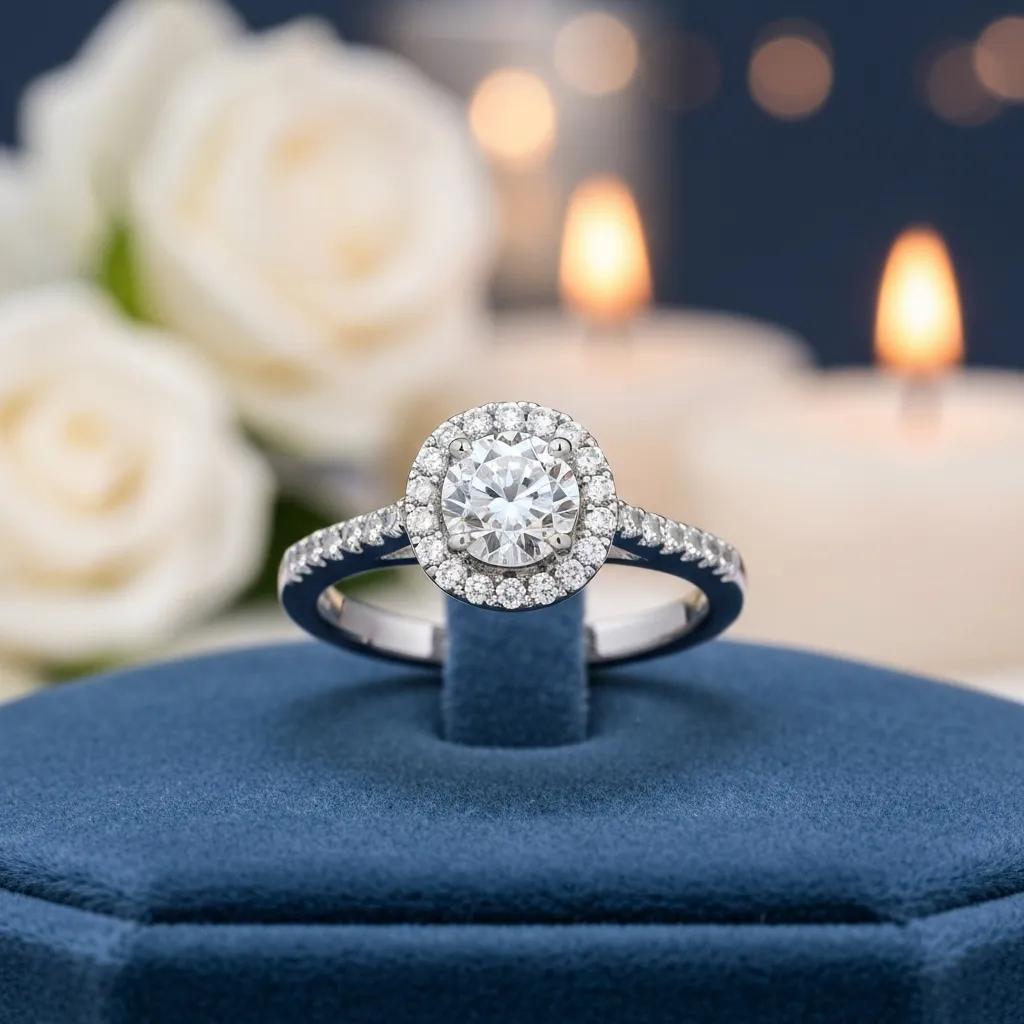
Pearls also come in many colors and sizes, from tiny freshwater pearls to large golden South Sea pearls, so the style can be delicate or bold. A pearl center with a diamond halo is the most popular design, followed by three-stone and toi-et-moi (two-stone) rings.

How are pearls formed?
A pearl forms when a mollusk, such as an oyster or freshwater mussel, coats an irritant with layer after layer of nacre. Nacre is calcium carbonate, mainly aragonite, held together by conchiolin, an organic horn-like protein (Wikipedia).
The idea that a grain of sand starts most pearls is largely a myth. Wikipedia notes that the irritant is usually organic material, a parasite or tissue displaced by damage, and that the mantle’s outer cells, the epithelium, build the pearl sac that lays down the nacre.
The overlapping aragonite platelets and thin conchiolin films near the surface bend and reflect light, producing a pearl’s luster and the soft play of color called orient. Color depends on the mollusk species and the water it grows in.
What is the difference between natural and cultured pearls?
Natural pearls form without human help and are now very rare; cultured pearls form when a farmer implants a nucleus or tissue, and they make up over 95% of the market. Cultured pearls are real pearls, not imitations.
In bead culturing, a polished bead cut from freshwater mussel shell, often from the Mississippi River or China, is implanted into a saltwater oyster with a small piece of mantle tissue from another mollusk. The tissue forms the pearl sac, which is the essential part: pearls can grow without a bead, but not without the tissue. The method was developed in Japan, where Tokichi Nishikawa received a patent in 1916; despite a common belief, Kokichi Mikimoto did not invent pearl culture, though he made cultured pearls famous.
| Pearl type | Grown in | Typical look |
|---|---|---|
| Freshwater | Freshwater mussels, mainly China | Many shapes and pastel colors; most affordable |
| Akoya | Saltwater oysters, Japan and China | Round, white, sharp luster; usually 2 to 10 mm |
| Tahitian | Black-lip oysters, French Polynesia | Dark gray, green and peacock tones |
| South Sea | Large oysters, Australia, Indonesia, Philippines | Big white or golden pearls; most valuable |
A natural pearl and a cultured one can look identical. The reliable test is an X-ray: a bead-cultured pearl shows a solid center without concentric growth rings, while a natural pearl shows rings throughout (Wikipedia).
How can you spot an imitation pearl?
Imitation pearls are glass, plastic or shell beads made to look like pearls. Some are glass coated with essence d’Orient, a solution made from fish scales, while others are made of mother-of-pearl, coral or conch shell.
A real pearl usually feels slightly gritty when rubbed gently against your tooth, while most imitations feel smooth, and real pearls show tiny surface variations. A gem lab can confirm what you have. Our guide to pearl hardness on the mohs scale explains why pearls scratch so easily compared with diamonds.
How is pearl quality judged?
Pearls are judged on luster, surface, shape, size, nacre thickness and color. The Pearl Source rates luster and pearl type as the factors with the biggest effect on price, ahead of size (The Pearl Source).
- Luster: sharp, bright reflections matter more than size.
- Shape: round is most valuable; half-round button pearls suit rings well, and irregular baroque pearls cost less.
- Surface: fewer spots and bumps mean a higher price.
- Nacre: thick nacre lasts longer and glows more.
- Size: measured in millimeters; loose pearls are weighed in grains, and one pearl grain equals 1/4 carat.
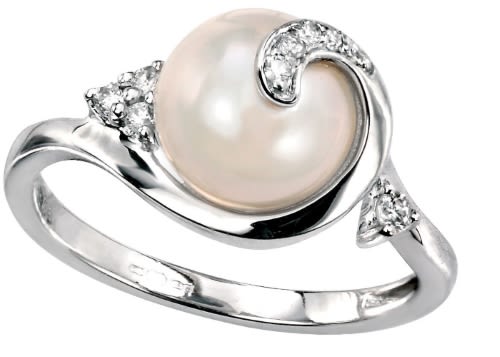
For a ring, the jeweler drills a partial hole at the least perfect point of the pearl and glues it onto a metal post, often with a cup or diamond halo around the base for protection. The most famous pearls are far too big for rings: the Hope Pearl, a blister pearl named after collector Henry Philip Hope, weighs about 450 carats (Winterson).
How much do pearl and diamond rings cost?
Most cost from under $200 for a freshwater pearl ring with tiny diamonds to several thousand dollars for a South Sea pearl with a diamond halo in 18K gold. The pearl type sets the starting price, and the diamonds and metal add the rest.
| Price tier | Pearl type | Single pearl starts at |
|---|---|---|
| Budget | Freshwater | About $1 |
| Mid-range | Akoya | About $100 |
| Mid-range to premium | Tahitian | About $100 |
| Luxury | South Sea | About $1,000, and several thousand for top quality |
These starting prices come from Brilliant Earth‘s pearl price guide; luster, size and matching push prices far higher. Diamonds add cost by size: a single natural 1 Carat Diamond alone has a median price near $3,700, and our 3 Carat Diamond Ring Price guide covers larger stones, though most pearl rings use small accent diamonds instead.

Will pearl ring prices change next year?
Pearl prices depend on harvests, which vary with water conditions and farm output, while the gold and diamonds in a ring follow their own markets. High gold prices have pushed setting costs up. Expect similar price ranges, and compare current listings before you buy.
Which pearl ring styles pair best with diamonds?
A diamond halo around a pearl is the classic choice, because the diamonds both add sparkle and shield the pearl’s edge. Bezel or cup settings protect it further.
Pearls also look lovely in nature-inspired designs such as the Diamond Butterfly Ring, and they make meaningful Anniversary Rings, since pearl is the traditional gift for the 30th anniversary. For something that says forever, compare Diamond Eternity Rings, or read why A Diamond Is Forever became such a famous line.
If you want color instead, a Pink Sapphire Diamond Ring or ruby and diamond rings are far harder and better for daily wear. As an engagement ring, a pearl needs care, so many couples prefer a diamond center from our diamond engagement rings guide and add pearls in other jewelry.

How do you care for a pearl and diamond ring?
Put the ring on last and take it off first: after makeup, perfume and hairspray, and before washing, cleaning or exercise. Pearls are organic and soft, so acids, sweat, cosmetics and dryness all dull them over time.
- Wipe the pearl with a soft, damp cloth after wearing; clean the diamonds separately with a soft brush.
- Never use an ultrasonic or steam cleaner, which can damage pearls and loosen the glue.
- Store the ring apart from other jewelry so diamonds and metal cannot scratch the pearl.
- Avoid rough surfaces, and keep pearls away from very dry heat for long periods.
- Have a jeweler check the post and glue every year or two.
Online jewelers such as James Allen also sell pearl and gemstone rings alongside diamonds.
How this guide was researched: pearl formation, types and testing come from Wikipedia’s pearl and cultured pearl articles, the pearl grain from Wikipedia’s grain article, quality factors from The Pearl Source, starting prices from Brilliant Earth, and Hope Pearl details from Winterson.
Frequently asked questions about pearl and diamond rings
Can you wear a pearl and diamond ring every day?
You can, but with care. Pearls are only 2.5 to 4.5 on the Mohs scale, so remove the ring for chores, workouts and washing, and choose a halo or bezel that protects the pearl.
Are cultured pearls real pearls?
Yes. Cultured pearls are grown by real mollusks after a farmer implants a bead or tissue, and they make up over 95% of pearls sold. Imitation pearls are glass, plastic or shell.
Which pearl type is best for a ring?
Akoya pearls are the classic choice for round, white, high-luster rings. Freshwater pearls are the most affordable, while Tahitian and South Sea pearls suit larger statement rings.
How much does a pearl and diamond ring cost?
Freshwater pearl rings with small diamonds can cost under $200, while South Sea pearls with a diamond halo in 18K gold can cost several thousand dollars. Single South Sea pearls start around $1,000.
How can you tell if a pearl is real?
Real pearls usually feel slightly gritty when rubbed gently against a tooth and show small surface variations. Only an X-ray can tell a natural pearl from a bead-cultured one.
How are pearls weighed?
Loose pearls are weighed in grains. One pearl grain equals 1/4 carat, or 50 milligrams, though most pearls are sold by size in millimeters.
How do you clean a pearl and diamond ring?
Wipe the pearl with a soft damp cloth and clean the diamonds with a soft brush. Never use an ultrasonic or steam cleaner, and keep pearls away from perfume, hairspray and chemicals.
Is a pearl a good engagement ring stone?
It is beautiful but soft, so it needs more care than a diamond or sapphire. Many couples choose a diamond center and add pearls in other jewelry.
Ready to choose a pearl ring?
Pick the pearl type for your budget, look for strong luster, choose a halo or bezel that protects the pearl, and wear it with care. For more guides, visit Diamond Info.
Anthony Chege is a gem and jewelry dealer with 20 years’ experience sourcing, grading and selling diamonds, gemstones and gold. He writes for Diamond Rings Info on diamond grading, pricing and buying.
Diamond Info | Pearl & Diamond