
What are emerald cut diamond engagement rings? Emerald cut diamond engagement rings feature a rectangular diamond with cut corners and long, step-like facets that flash like a hall of mirrors. They look larger than rounds of the same weight but show inclusions and tint more easily, so clarity and color matter more. A natural 1 carat emerald cut has a median price of about $3,100.
Last updated: November 2026 · Prices checked against CaratRadar and TheDiamondPrice listings
Diamond Rings Info may earn a commission if you buy through links on this page, at no extra cost to you.
Key Takeaways
- 8% of engagement rings bought in 2025 had an emerald cut center stone, tied for third place behind round (26%) and oval (25%) (Rapaport)
- GIA gives cut grades only to round brilliants, so judge an emerald cut on its proportions, polish and symmetry (GIA)
- Step facets act like windows, so most buyers need higher clarity (often VS1 or better) than in a round diamond
- Grace Kelly’s Cartier engagement ring held a 10.48-carat emerald cut diamond with baguette side stones (The Knot)
- Natural emerald cuts have median asking prices of about $3,122 at 1 carat, $14,751 at 2 carats and $37,349 at 3 carats (CaratRadar)
- Emerald cut engagement rings look larger per carat than rounds, which helps the budget

What are emerald cut diamond engagement rings?
An emerald cut is a rectangular step cut with cropped corners. Instead of many small triangular facets, it has long parallel facets running down the pavilion like a staircase, which gives diamond emerald cut engagement rings their calm, glassy look.

The shape was first used for emerald gemstones, because step cutting puts less strain on a brittle crystal, and it was later adopted for diamonds. It became a favorite during the Art Deco years of the 1920s and 1930s, when clean geometric lines were in fashion. The choice of setting and the quality of the cut decide how well it performs.

It’s easy to mix it up with its cousins. The Asscher is a square step cut, the radiant cut has the same cropped-corner outline but brilliant faceting for more sparkle, and the princess is a square brilliant with sharp corners.
How do emerald cut engagement rings reflect light?
Emerald cut engagement rings give broad flashes of light and dark instead of the tiny sparkles of a round brilliant. Light bounces between the long facets to create the “hall of mirrors” effect that fans of the shape love.
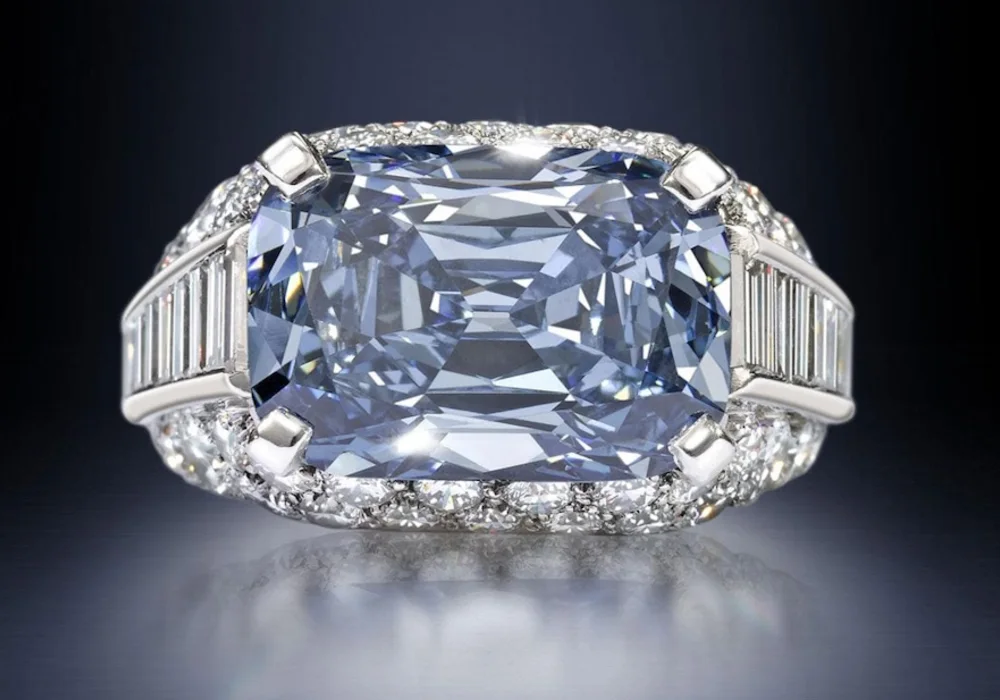
The trade-off is less fire and less sparkle than a round. In my experience, people who love emerald cuts describe them as elegant and quiet rather than flashy, so it’s worth seeing one in person under ordinary room light before you decide.
Is an emerald cut right for you?
It suits you if you like clean lines and a quieter, more architectural look than a round. Emerald cuts look larger per carat, flatter long fingers and pair well with baguettes and plain bands, so diamond emerald cut engagement rings rarely date.
The downsides are real, though. They show inclusions and body color more easily, the corners need protecting, and they won’t give you the fiery sparkle of a round or oval. If sparkle is your top priority, look at a radiant cut instead; if you want that calm hall-of-mirrors glow, the emerald cut is hard to beat.
How should you judge an emerald cut diamond’s quality?
Judge an emerald cut on proportions and symmetry first, then clarity and color. Because GIA does not give fancy shapes a cut grade, look at the report’s polish and symmetry grades and at the stone itself (GIA).
| Factor | What to look for in an emerald cut | Why |
|---|---|---|
| Length-to-width ratio | About 1.3 to 1.5 for the classic look | Below that looks square; above looks very long and slim |
| Polish and symmetry | Excellent or Very Good | Uneven steps break the mirror pattern |
| Clarity | Often VS1 or better; eye-clean is the real test | Open facets show inclusions |
| Color | H or better in white metal; I or J in yellow gold | Large flat facets show tint more than a round |
| Carat weight | Compare face-up size, not just carats | A shallow stone looks bigger but can lose brightness |
Use our clarity chart and color chart to compare grades, and always buy with an independent report from GIA or IGI; our diamond certificate guide explains what to check. The ratio ranges above are dealer rules of thumb rather than lab standards, so trust your eye.
Which settings suit diamond emerald cut engagement rings?
A classic Solitaire shows off the step facets best, and four prongs at the corners protect the cropped edges. Other popular choices are side stones, halos and three-stone designs.
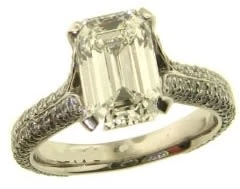
Tapered baguettes echo the rectangular outline, as in Grace Kelly’s ring. A halo of small diamonds adds sparkle and makes the center look bigger, and a three-stone ring with an emerald cut center stands for past, present and future. Platinum and white gold keep a colorless stone looking icy; see our platinum diamond rings guide.
Think about daily life too. A stressed young man once came to me with a printout of a 2-carat emerald-cut diamond on ultra-thin micro-pavé prongs that matched his fiancée’s Pinterest board. She was a pediatric nurse who rock-climbed on weekends, so I told him a ring “isn’t a museum piece; it’s heavy machinery.” The emerald cut’s corners would snag on medical gloves and the thin prongs would bend, so I suggested a cushion or round cut in a low-profile six-prong or bezel setting, with the delicate pavé on a separate band she could leave at home during shifts. A year later the ring had survived countless hospital shifts and outdoor trips without losing a stone. If you love the emerald cut and live an active life, choose a bezel or sturdy corner prongs.
Which celebrities wear emerald cut engagement rings?
Emerald cut engagement rings have a long Hollywood history. Prince Rainier III commissioned Cartier to make Grace Kelly’s 10.48-carat emerald cut ring, flanked by two baguettes (The Knot).
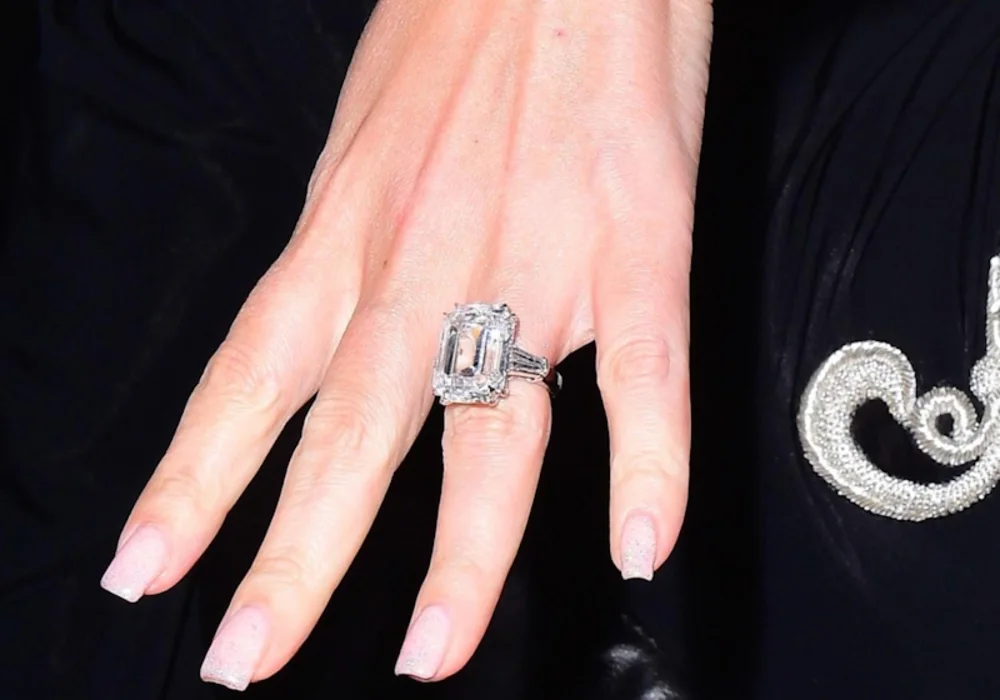
Jay-Z proposed to Beyoncé in December 2007 with a Lorraine Schwartz emerald cut diamond on a pavé split band, which experts estimate at about 18 carats (HELLO!). Elizabeth Taylor’s 33.19-carat diamond, often listed as an emerald cut, is actually an Asscher cut; Richard Burton bought it in 1968 and it sold for $8.8 million in 2011 (Wikipedia).

How much do emerald cut diamond engagement rings cost?
A natural 1 carat emerald cut has a median asking price of about $3,100, a 2 carat about $14,800 and a 3 carat about $37,300, before the setting. Lab-grown emerald cuts cost a small fraction of that.
| Carat weight | Natural, median | Natural, G to I and VS1 to SI1 | Lab-grown, median |
|---|---|---|---|
| 1 carat | $3,122 | $2,260 to $3,080 | $577 |
| 2 carats | $14,751 | $12,850 to $18,700 | $1,007 |
| 3 carats | $37,349 | Not tracked | Not tracked |
The medians come from 11,570 natural 1 carat, 2,407 natural 2 carat and 1,002 natural 3 carat listings, plus about 10,000 lab-grown listings at each of 1 and 2 carats (CaratRadar). The middle column is the typical range for G to I color, VS1 to SI1 clarity stones with very good or excellent polish and symmetry (TheDiamondPrice).
Emerald cuts usually cost less per carat than round brilliants, because cutting them wastes less of the rough crystal. The 1 carat emerald cut median sits about 16% below the $3,714 median for a 1 carat round (CaratRadar).
Will emerald cut prices change next year?
Expect small natural stones to drift lower, large natural stones to hold steady and lab-grown stones to keep falling. Rapaport’s wholesale index fell 8.2% in a year for 1 carat diamonds but only 0.4% for 3 carat stones (Rapaport). Treat the table as a guide for the year ahead, and treat lab-grown prices as a ceiling.
How can you save on an emerald cut?
Spend on clarity and color first, then trim carat weight, since inclusions and tint show more in this shape than extra size does. Buying just under a round number, such as 0.90 or 1.90 carats, costs noticeably less and looks the same on the hand.
Lab-grown emerald cuts cost far less again, though they resell for very little. Online sellers such as James Allen show emerald cuts on 360-degree video, which helps you judge clarity, and a custom ring lets you match the stone to the setting. Compare other shapes in our Princess Cut Rings guide or browse every diamond engagement ring style.
How do you care for an emerald cut diamond ring?
Clean it regularly with warm water, mild dish soap and a soft brush, because grease on the large flat facets dulls the mirror effect quickly. Have the corner prongs checked once or twice a year, since the cropped corners are the stone’s most exposed points.
How I researched this guide
This rewrite draws on my 20 years grading and setting step-cut diamonds. Facts come from GIA’s fancy-shape guidance, The Knot’s study of 10,000+ couples via Rapaport, and published records of famous rings. Prices come from more than 35,000 emerald cut listings tracked by CaratRadar and TheDiamondPrice in October and November 2026. The table’s ratio and grade ranges are trade rules of thumb, not lab standards.
Frequently asked questions about emerald cut diamond engagement rings
How much is a 1 carat emerald cut diamond?
A natural 1 carat emerald cut has a median asking price of about $3,122, and G to I color, VS1 to SI1 stones typically cost $2,260 to $3,080. A lab-grown 1 carat emerald cut has a median of about $577.
Are emerald cut engagement rings still popular?
Yes. In The Knot’s study of couples married in 2025, 8% of engagement rings had an emerald cut center stone, tied for third behind round at 26% and oval at 25%.
What clarity is best for an emerald cut diamond?
Many buyers choose VS1 or better because the open step facets make inclusions easier to see. The real test is whether the stone is eye-clean at normal viewing distance.
What color grade should I choose for an emerald cut?
H or better looks white in platinum or white gold, while I or J can look fine in yellow gold. Large flat facets show tint more than a round brilliant does.
Does an emerald cut diamond look bigger?
Yes. Its elongated shape spreads the weight across a larger face-up area than a round of the same carat weight, so it usually looks bigger on the finger.
Are emerald cut diamonds cheaper than round diamonds?
Usually, yes. The median natural 1 carat emerald cut lists about 16% below a 1 carat round, because cutting it wastes less rough. Many buyers spend the savings on better clarity.
What is the difference between emerald cut and Asscher cut?
Both are step cuts with cropped corners. The emerald cut is rectangular, while the Asscher cut is square with a windmill-like pattern of facets.
What setting is best for an emerald cut diamond?
A four-prong solitaire shows the facets best, while a bezel or halo protects the corners for active wearers. Baguette side stones echo the rectangular shape.
Ready to find your emerald cut?
Set your clarity and color floor, compare stones face-up, and explore more ring guides at Diamond Info.
Anthony Chege is a gem and jewelry dealer with 20 years’ experience sourcing, grading and selling diamonds and gemstones. He writes for Diamond Rings Info on diamond grading, pricing and buying.
Diamond Info | Princess Cut Rings | Emerald Cut Rings